

Silence as Self-Care: A Simple Meditation Challenge to Calm Your Mind — and Your Gut
# Silence as Self-Care: A Simple Meditation Challenge to Calm Your Mind — and Your Gut
By Jake Morrison
## Energetic hook
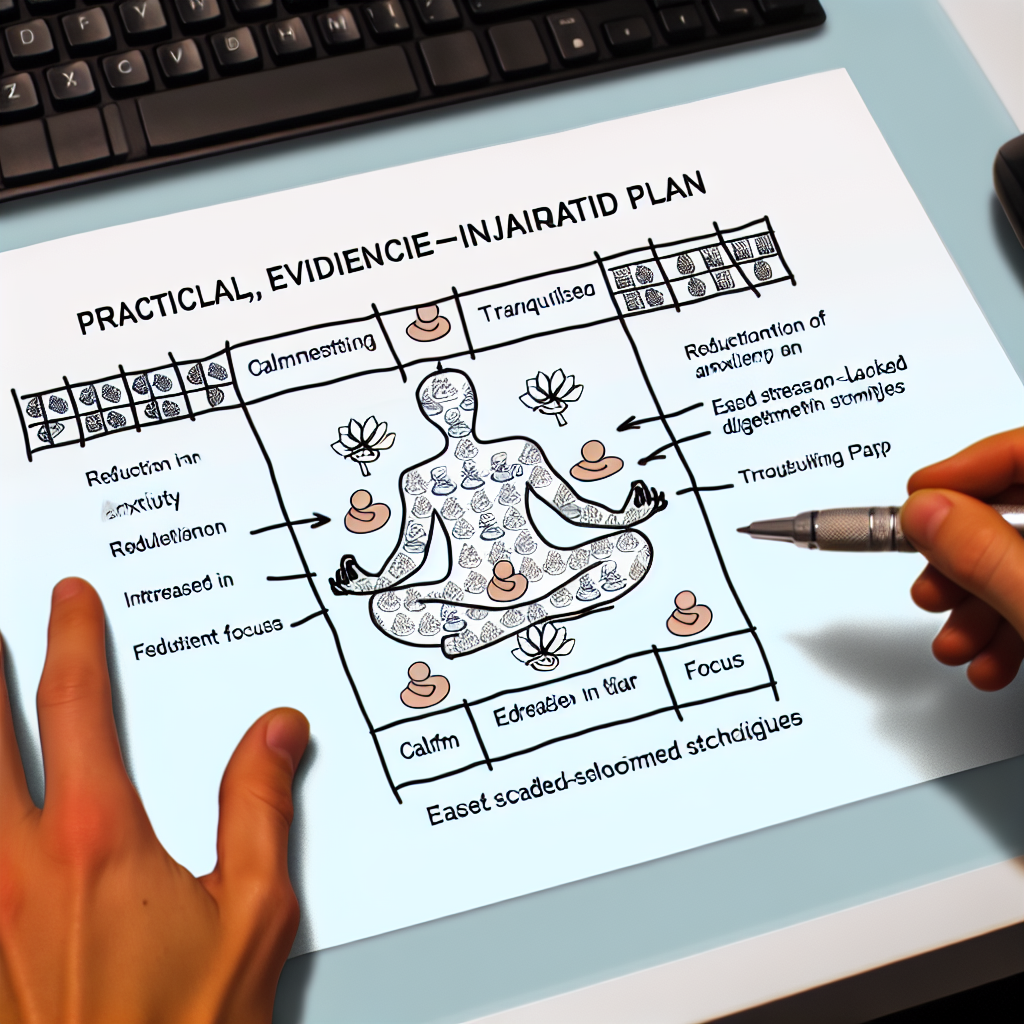
You train your body with intention — progressive overload, recovery days, proper form. Why treat your mind like it will magically fix itself? If your brain is always on — scanning every twitch, tracking your heartbeat, scrolling through feeds to avoid a quiet second — you are not alone. We fill silence because it feels vulnerable or unproductive. But quiet, when used intentionally, is restorative. Meditation is a high-return, low-barrier practice that helps reduce anxiety, sharpen focus, and even calm stress-related digestive symptoms. Here’s a practical, athlete-minded plan you can actually do.
## The science, made simple
Clinical research shows regular meditation reduces anxiety, decreases rumination, and improves attention. On a physiological level, slow diaphragmatic breathing and mindful awareness stimulate the vagus nerve — the key messenger in the gut-brain axis. When vagal tone improves, the body shifts out of fight-or-flight and into a calmer state that supports digestion and lowers GI hyperarousal (useful for people with IBS or reflux exacerbated by stress).
You don’t need enlightenment fast. Benefits are cumulative: short, consistent sessions strengthen attention and the stress response over weeks and months, much like short daily workouts build fitness.
## Form and technique: how to practice well
Think of meditation like movement practice: posture, breathing mechanics, and intentional cues matter.
– Posture: Sit upright with a neutral spine. You can also practice in a chair with feet on the floor or lie on your back if sitting is uncomfortable. The key is a stable, relaxed position where you can breathe diaphragmatically.
– Diaphragmatic breathing: Place one hand on your belly and one on your chest. Inhale through the nose, aiming to expand the belly more than the chest. Exhale slowly. This recruits the diaphragm and stimulates the vagus nerve.
– Anchor: Choose a single anchor — breath, body sensations, or a simple phrase. When attention drifts, label the distraction (thinking, planning, worry) and return to the anchor without scolding yourself.
– Timing: Use a gentle timer or guided track. Ten minutes done consistently is better than sporadic long sessions.
Modifications: If sitting still is hard, try a walking meditation (slow, deliberate steps), or a shorter 1–3 minute breath reset between tasks.
## A practical 4-week challenge you can actually do
Purposeful, measurable goals improve follow-through. Pick a commitment that feels doable (for example, meditate five minutes a day, five days a week). Here’s a progression you can adapt to your schedule and fitness mentality.
Week 1 — Build the habit
– Frequency: Daily, 5 minutes
– Technique: Breath awareness — sit or lie comfortably, place one hand on your belly, follow the inhale-exhale cycle.
– Tip: Use a timer with a gentle chime. Celebrate showing up; habit formation beats intensity.
Week 2 — Deepen presence
– Frequency: Daily, 10 minutes
– Technique: Body scan — move attention slowly from toes to head, noticing sensations without judgment.
– Tip: If your mind wanders, label and return. Treat distraction as the work of the session.
Week 3 — Explore compassion
– Frequency: 5–10 minutes daily plus one 15-minute session midweek
– Technique: Loving-kindness or self-compassion phrases such as may I be well, may I be safe, may I be strong.
– Tip: This practice is especially useful when anxiety triggers self-criticism; it trains the brain toward supportive internal dialogue.
Week 4 — Stabilize and expand
– Frequency: 15–20 minutes, 5–6 days a week
– Technique: Mix breath, body scan, and open awareness (noticing thoughts and sensations as passing events).
– Tip: Choose your favorite guided practice and schedule it like any other appointment.
## Common mistakes and coaching cues
– Mistake: Chasing blankness. Cue: Swap clear-your-mind for notice-without-following. Label thought and return to the anchor.
– Mistake: Using posture that causes strain. Cue: Stack the head over the spine, relax shoulders, soften the jaw.
– Mistake: Thinking longer equals better. Cue: Consistency beats duration. Five minutes daily is powerful.
– Mistake: Punishing yourself for a busy session. Cue: Celebrate the fact that you showed up; curiosity outperforms critique.
## How this fits into your fitness routine
Meditation is recovery work for your nervous system. Use it like mobility or foam rolling: short daily sessions improve stress resilience, recovery quality, and sleep. If you train hard, add a 5-minute breath session post-workout to lower sympathetic tone and aid parasympathetic rebound.
## If digestive symptoms are part of the picture
If stress coincided with onset or worsening of GI issues, meditation can be a helpful component alongside medical care. Diaphragmatic breathing and vagal-stimulating practices reduce GI hyperarousal for many people. Still, combine meditation with appropriate evaluation from a clinician and consider therapy or nutrition guidance when needed. Some notice relief within weeks; for others it is gradual. Consistency matters more than speed.
## Tools that reduce friction
– Short guided meditations on apps like Insight Timer or free YouTube tracks.
– Gentle timers with chimes to avoid jarring alarms.
– A simple calendar checkmark, habit-tracking app, or an accountability partner to log sessions.
## Language to use with yourself
Replace I cant with curiosity: that session was noisy — what did I notice? What helped? Swap perfectionism for process praise: you showed up. Celebrate micro-wins like a five-day streak — they compound.
## Final encouragement
You do not need a special room, hours of time, or dramatic life change. You need a tiny contract with yourself: show up, be kind when your mind resists, and keep going. The payoff is practical — calmer nights, sharper focus, less reactivity — and quietly profound: a clearer sense of what matters.
Will you try five minutes today and log it for a week so you can see what changes in your focus, sleep, or stomach?