

Milestone Muscle: How to Turn Small Wins into Big Strength Gains
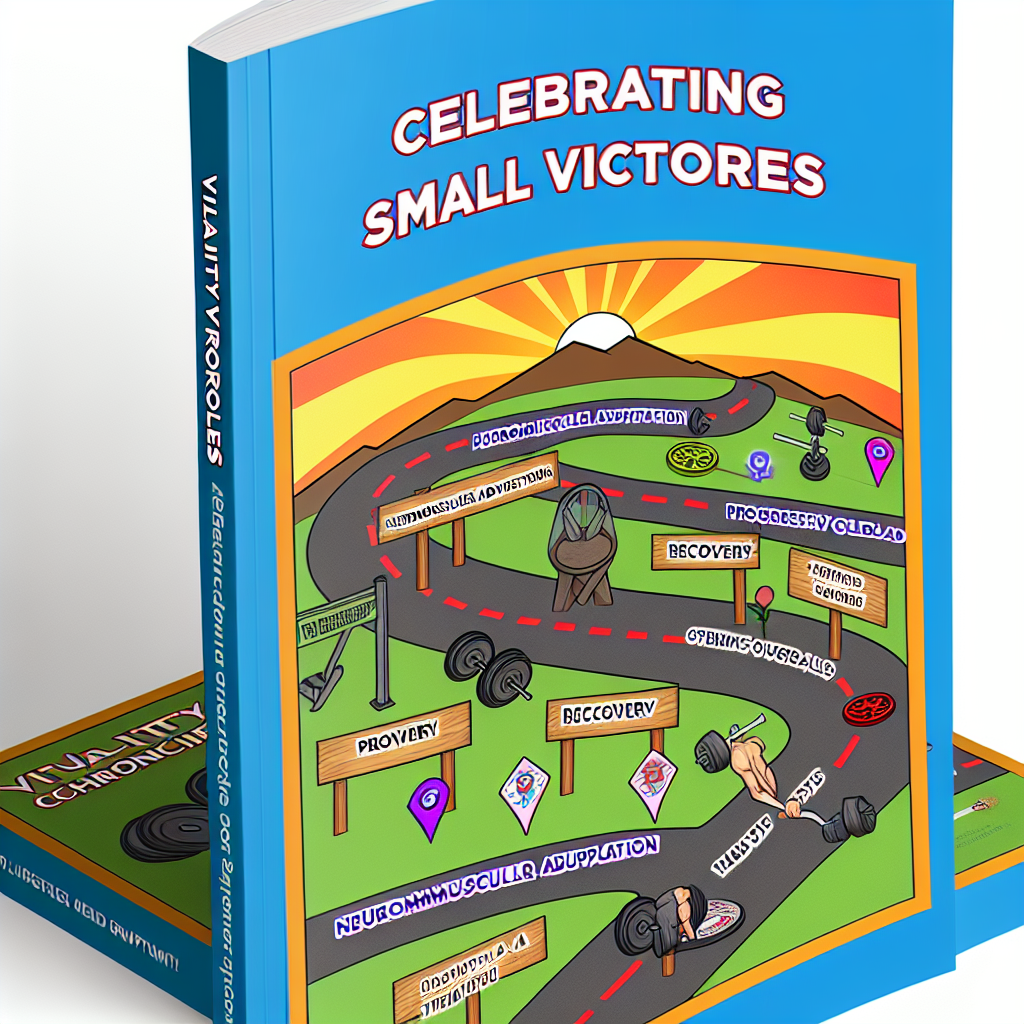
# Vitality Chronicles — Jake Morrison
## Milestone Muscle: How to Turn Small Wins into Big Strength Gains
Every lifter remembers that one moment: the bar that wouldn’t budge suddenly moved, a surprise bench PR, or the first time you felt truly strong overhead. Those moments aren’t luck — they’re signposts. Celebrate them, log them, and use them as fuel.
This article breaks down the science you need, the practical steps to apply this week, and coaching cues that help you convert small victories into meaningful, sustainable strength gains.
—
## The science behind small wins
Strength increases come from two main adaptations:
– Neuromuscular adaptation: your nervous system gets better at recruiting muscle fibers and coordinating movement patterns. This is why technique practice and frequency matter.
– Muscular adaptation (hypertrophy and connective tissue strengthening): muscle size and tendon/ligament resilience increase when you provide appropriate mechanical tension and recovery.
A few quick principles to remember:
– Specificity: You get better at what you practice. If you want a stronger press, press often with quality reps.
– Progressive overload: Add weight, reps, sets, or reduce rest strategically over time. Even tiny jumps (2.5–5 lb / 1–2 kg) add up.
– Recovery matters: Strength gains happen between sessions. Sleep, protein intake (~1.6–2.2 g/kg bodyweight for strength phases), and smart deloads are non-negotiable.
Put together, these ideas explain why a well-executed light win (a fast, clean double at a new weight) predicts larger improvements when you build around it.
—
## Practical application: technique, frequency, and assistance
Build the foundation before chasing big numbers. These are repeatable elements you can apply this week.
### Bracing & breathing
– Learn the Valsalva-style brace: take a deep belly breath, fill your abdomen, and tighten the core before the descent or drive. This creates intra-abdominal pressure and protects the spine.
– Practice bracing with lighter sets until it becomes automatic.
### Positioning cues by lift (simple, usable cues)
– Bench: “Pack the shoulders, press the chest to the bar, drive through the heels.” Keep scapulae retracted, use controlled leg drive.
– Squat: “Chest up, knees out, sit back to a point of control.” Find a stance that lets you keep a neutral spine and reach depth without collapse.
– Press: “Wrist stacked, lats tight, feet drive the floor.” Think about a straight vertical bar path and full shoulder stability.
### Mobility to prioritize
– Thoracic extension and shoulder external rotation for pressing
– Ankle dorsiflexion and hip mobility for squat depth
These are small, repeatable habits; they compound faster than randomly chasing 1RMs.
—
## Targeted tactics — press, squat, bench
Strict Press (aiming for the 300 club)
– Frequency: 2–3 pressing days per week with varied intensity (heavy, technique, and dynamic).
– Assistance: incline DB press, seated strict press, triceps extensions, face pulls.
– Lockout work: rack presses or partials to strengthen the top range.
– Tip: keep the ribcage down and drive through your feet — power starts at the ground.
Squat (raw power and depth)
– Quality volume: sets in the 70–85% range for 3–6 reps build strength without constant CNS drain.
– Variations: pause squats for control, box squats for hip drive, front squats for upright torso work.
– Posterior chain: Romanian deadlifts, good mornings, and glute-ham raises pay dividends.
– Tip: if depth is inconsistent, address ankle and hip mobility before increasing load.
Bench (turn a milestone into a new baseline)
– Groove practice: regularly practice your full setup (foot placement, arch, grip width).
– Accessories: rows for upper-back stability, triceps work for lockout, paused benches for explosiveness.
– Tip: film your setup — small adjustments in foot drive and arch add reliable pounds.
—
## Programming & recovery — the practical rules
– Frequency: Most intermediates do well hitting each lift 1.5–3x/week.
– Progressive overload: Use microloads and plan increments. If a jump stalls, add volume instead of chasing big jumps.
– Deloads: Every 6–8 weeks, reduce volume and intensity for a week to consolidate gains.
– Nutrition & sleep: Aim for a modest calorie surplus in strength phases, prioritize protein, and get 7–9 hours of sleep.
Sample 4-day week (easy to adapt):
– Day 1: Heavy squat (3–5 x 3–6), posterior chain, core
– Day 2: Heavy bench/press (3–5 x 3–5), upper-back, triceps
– Day 3: Recovery/technique (mobility, band work, light single-leg work)
– Day 4: Paused/front squat (3–4 x 3–5), unilateral legs
– Day 5: Press variation + bench accessory (speed work), rotator cuff
Scale sets/reps by experience and recovery. Beginners need less volume; intermediates can add quality sets.
—
## Common mistakes & quick fixes
– Mistake: Chasing maxes weekly. Fix: Build submaximal volume and test less often.
– Mistake: Neglecting cues and setup. Fix: Spend a few minutes before heavy sets running through a checklist and filming a rep.
– Mistake: Skipping deloads. Fix: Schedule them like a training day — your lifts will be stronger afterward.
Quick pre-session checklist:
– Warm joints and movement patterns
– Review cues and plan sets/reps/RPE
– Confirm protein/calories are on track
– Have a fallback plan if a set feels off (reduce load or reps)
—
## Motivation: use data, celebrate, and repeat
Log your wins. After a milestone, ask: What changed? More sleep? Better warm-up? A cue that clicked? Treat the win as data, not luck. Repeat what worked and slowly expand it into your routine.
Community helps: share videos for feedback, ask specific questions, and use others’ patterns as experiments — not as measurements of your worth.
—
Takeaway
Big lifts come from small, consistent improvements: better technique, targeted assistance, thoughtful programming, and disciplined recovery. Celebrate milestones as proof you’re on the right path, then build around what worked. The next breakthrough is closer than you think if you keep the ego in check, the form tight, and the long game in view.
What’s one small win you’ll chase this week — and how will you build the routine to make it repeatable?