

Your Smart Nutrition Playbook: How to Ask, Hydrate, and Separate Protein Facts from Fiction
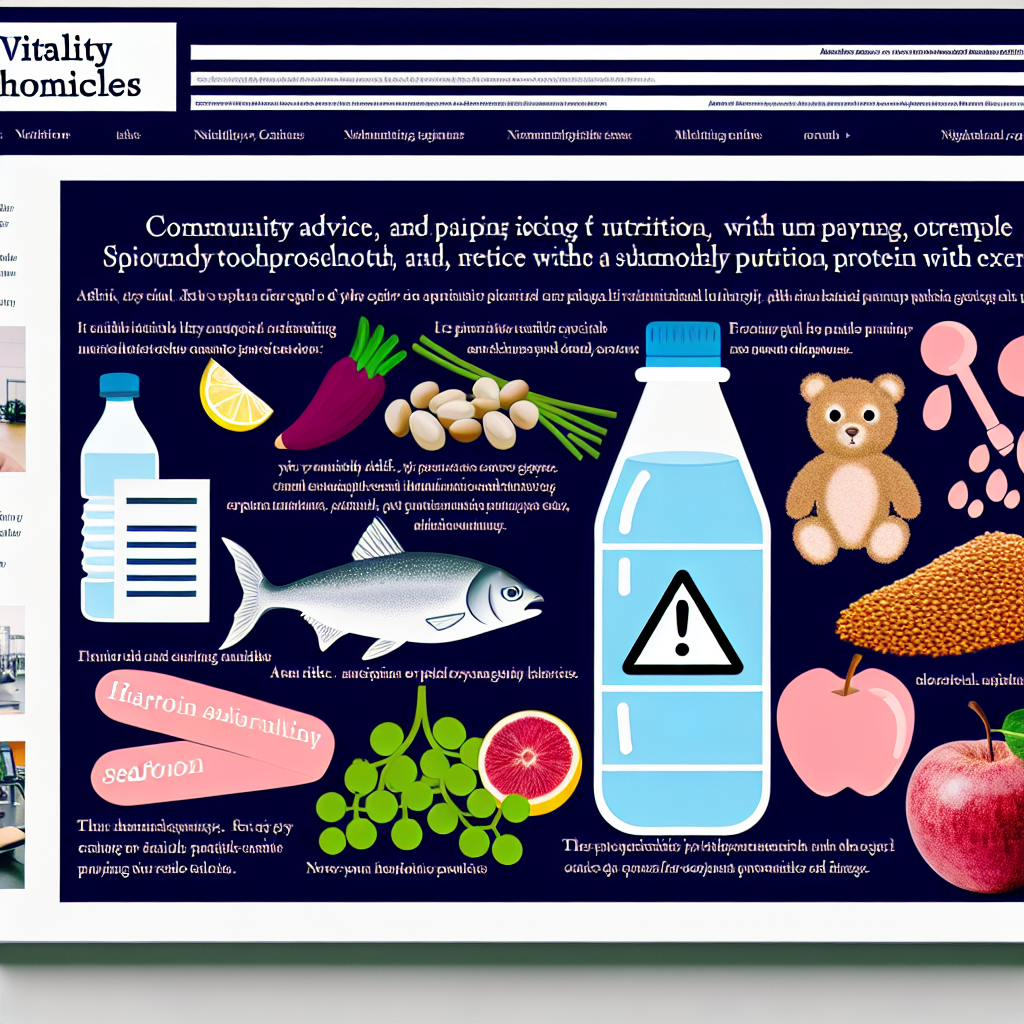
# Your Smart Nutrition Playbook: How to Ask, Hydrate, and Separate Protein Facts from Fiction
Intro
Online nutrition communities can be a goldmine of practical tips, curiosity, and lived experience — but they also bring noise, myths, and boundaries. Whether you’re wondering what to keep in your fridge for hydration, fretting about additives in store-bought salmon, or trying to decode the “you can only absorb 40 g of protein” gym lore, there’s a smarter, safer way to get answers. Read on for the science, simple actions, and the motivational push you need to turn nutrition knowledge into real progress.
Use communities the right way
Forums and comment threads are fantastic for recipe ideas, quick wins, and hearing what worked for a real person. But not every question belongs in a public thread. Personal medical or diagnostic questions need a licensed clinician — think physician or registered dietitian who can look at your labs and history.
Quick rules for community-savvy posting:
– Be concise and give context: goals, activity level, age range, and any major health issues (non-identifying). This helps responders tailor advice.
– Ask for citations or the reasoning behind claims. If someone says “this works,” a quick “Got a source?” is fair.
– Use designated spaces for personal advice. Many groups have weekly threads for individualized Q&A — use them.
– Respect moderators. They keep discussions useful and safe.
Treat forums as idea-scouting, not diagnosis delivery. Use what resonates and validate it with trusted sources.
Hydration staples worth keeping in your fridge
Hydration needs depend on climate, activity, and how salty your sweat is. Keep these staples for most situations:
– Cold water: the everyday essential. Keep a big bottle or jug to sip from all day.
– Sparkling water: low-calorie, satisfying fizz that helps replace sodas.
– Coconut water: natural potassium and a touch of sodium — handy after light to moderate sweat.
– Low-sugar electrolyte mixes or sports drinks: for long, hot workouts or endurance sessions where you lose a lot of sodium.
– Infusion jars (lemon, cucumber, mint): flavor without sugar — they make sipping all day easier.
Most days, plain water is enough. For long endurance sessions, heavy sweating, or hangover recovery, choose a low-sugar electrolyte option. If you have high blood pressure or kidney disease, check with your clinician before changing electrolyte intake.
What is sodium tripolyphosphate (STPP) — and should you care?
STPP is a food processing ingredient used in some frozen and pre-packaged seafood to retain moisture and improve texture. Regulatory bodies consider it safe at permitted levels, but here’s what matters practically:
– It can increase sodium content. If you’re watching salt, that added sodium matters.
– Fish treated with STPP can feel juicier — that’s processing, not freshness.
– Occasional consumption is unlikely to harm a healthy person, but if you prefer minimally processed food, choose whole-fish fillets or trusted suppliers.
If an ingredient list includes phosphates and you’re concerned, rinse the fish before cooking or opt for fresh fish when possible. And if you have conditions affected by phosphate or sodium, consult your healthcare provider.
Protein myth-busting: is there really a 40-gram cap?
Short answer: no — that claim oversimplifies two different processes: digestion/absorption and muscle protein synthesis (MPS).
– Absorption: Your gut breaks protein into amino acids and absorbs them. There isn’t a strict upper ceiling where extra protein just gets wasted. Amino acids enter a circulating pool and are used for many body functions — repair, enzymes, immune response, and yes, muscle.
– Muscle protein synthesis: MPS is the process that builds muscle in response to protein and resistance exercise. Research shows a meal-size “saturation” point for maximizing MPS (commonly 20–40 g for many adults). Beyond that moment, extra protein won’t further increase MPS, but those amino acids can support other needs.
Practical protein approach:
– Spread protein across meals: aim for ~0.25–0.4 g per kg bodyweight per meal. For a 70 kg person, that’s roughly 18–28 g per meal.
– Total daily intake matters more: for active adults, ~1.2–2.0 g/kg/day supports maintenance and growth.
– If you strength-train, prioritize a protein-containing meal or snack after workouts when muscle sensitivity to protein is higher.
Pairing protein strategy with simple strength work maximizes return on your nutrition investment.
Exercise & technique breakdown (do this with your protein)
You don’t need fancy equipment to benefit from protein timing. Pair your nutrition with basic, well-executed movements to drive MPS and functional strength.
1) Squat (bodyweight or goblet)
– Purpose: builds legs and core stability.
– Cue: Sit your hips back like you’re lowering onto a chair, keep chest up, knees tracking over toes.
– Common mistakes: letting knees collapse in, rounding the lower back, or standing on toes.
– Modification: Box or chair squat to learn depth and control.
2) Hip hinge (Romanian deadlift or kettlebell deadlift)
– Purpose: trains posterior chain — glutes and hamstrings — which are huge for strength and posture.
– Cue: Hinge at the hips, push them back, maintain a neutral spine, feel the stretch in the hamstrings.
– Common mistakes: rounding the back, initiating with the knees instead of the hips.
– Modification: Hip hinge to a bench or perform single-leg Romanian deadlift with bodyweight for balance work.
3) Push (push-up or bench press)
– Purpose: upper-body pressing strength and core stability.
– Cue: Keep a straight line from head to heels, hands under shoulders, lower with control.
– Common mistakes: flaring elbows excessively, sagging hips.
– Modification: Incline push-ups (hands on wall or bench) to reduce load.
Do 2–4 sets of 6–12 reps for each, focusing on control and progressive overload (add reps, slow the tempo, or increase load). Pairing a balanced protein meal within 1–2 hours of resistance training helps maximize adaptation.
Common mistakes & practical tips
– Chasing perfection: consistency beats perfect. Small, daily wins compound.
– Ignoring total protein: obsessing over “per-meal caps” misses the bigger point — total daily intake.
– Forgetting hydration: being even mildly dehydrated affects performance and recovery.
– Skipping form practice: lifting heavier without good technique invites injury and stalls progress.
Motivation that works
Think of nutrition and training as teammates, not separate projects. A protein-focused meal after a smart strength session is a direct investment in recovery and capability. Celebrate the small wins — a better squat depth, a protein habit that sticks, one more rep than last week.
Where to go from here
When you see a nutrition claim online, ask: Who’s saying this? What’s the evidence? Is it anecdote or peer-reviewed work? Use PubMed, Google Scholar, or talk with a registered dietitian for personalized guidance.
Takeaway
Be community-savvy: use designated threads for personal questions, respect moderators, and ask for evidence. Keep simple hydration options — water, sparkling water, and an electrolyte pick for heavy sweats. Don’t fear STPP in packaged fish, but watch sodium and choose less-processed when it matters to you. Spread your protein intake across the day and prioritize total daily protein and post-workout nutrition over rigid per-meal caps. Pair this approach with a few strength fundamentals, focus on form, and show up consistently.
Ready to try one small change this week — add a 20–30 g protein meal after your next strength session or swap one sugary drink for sparkling water — which will you pick?