

Midweek Check-In: How to Get the Support You Need — Safely and Surely
# Midweek Check-In: How to Get the Support You Need — Safely and Surely
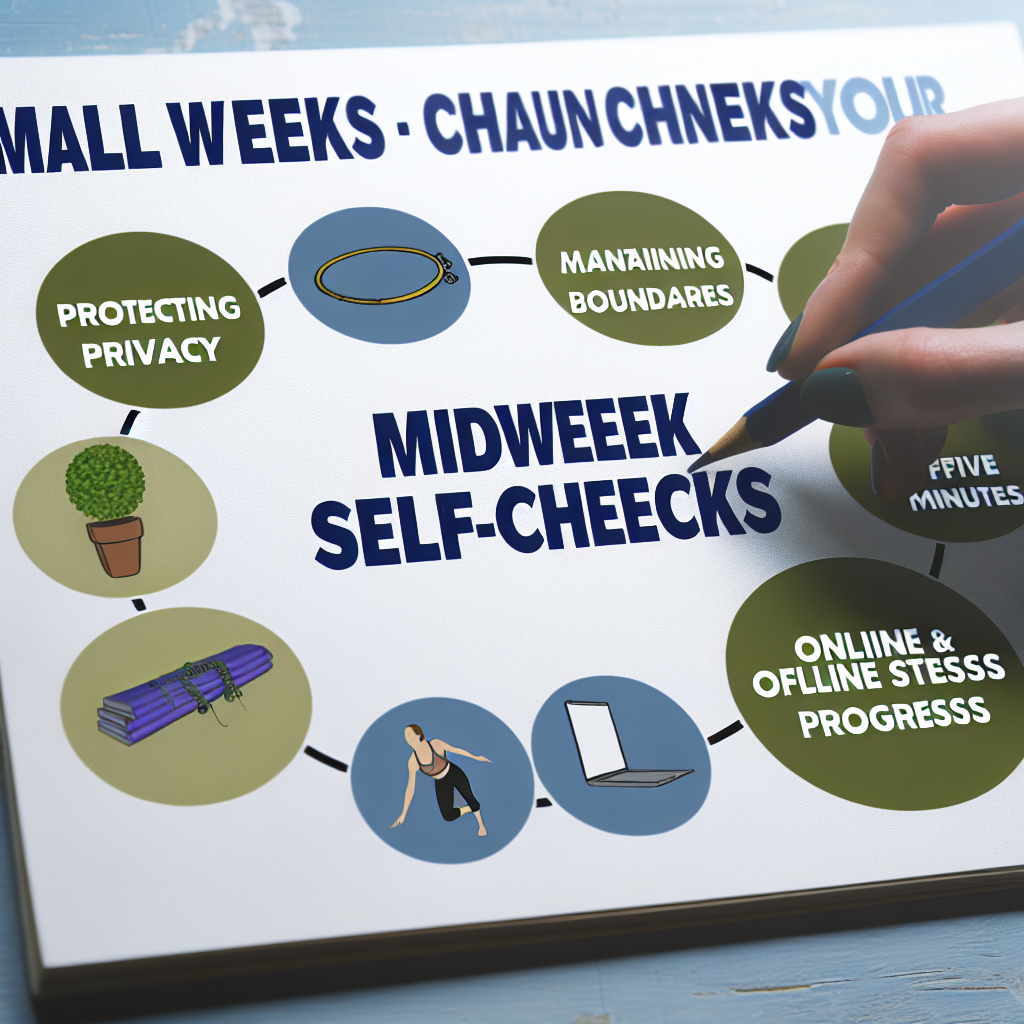
Sometimes the smallest act — pausing and noticing how you really are — can shift your week. Whether you’re stalled on a training plan, juggling work and family, or just plain tired, a midweek check-in can interrupt autopilot and get you back on track. From an athlete’s perspective, those tiny course corrections are how you avoid bigger setbacks. Below I’ll break down the science, give you quick movement and grounding tools, and walk through safe ways to get help (online and off) so your fitness journey stays sustainable.
## The science behind the pause
Checking in isn’t woo‑woo — it changes your brain and behavior. Self-monitoring nudges the prefrontal cortex to notice patterns, which improves decision-making and impulse control. Small, frequent observations increase awareness of stressors and energy leaks so you don’t burn out. Habit research shows micro-actions (5 minutes of journaling, a short breath practice, or a single helpful message to a friend) are easier to repeat and compound into lasting change. In short: tiny inputs = measurable outputs over time.
## Midweek check-ins that actually work
Set a low-effort ritual you can stick to. Consistency beats intensity here. Try a 5-minute sequence:
– Three question scan: What’s working? What’s draining me? What’s one small support I need today? Keep answers short — one sentence each.
– A breathing reset: 6 breaths in, 6 breaths out with your mouth closed, focusing on the exhale.
– A movement cue: a single bodyweight move to reconnect with how your body feels (see technique section below).
Track these micro-checks across a week. Patterns will emerge — sleep dips before heavy training, appetite drops when you’re stressed, or you feel energized after outdoor workouts. Use that data to plan rest days, adjust intensity, or ask for support earlier.
## Quick movement and grounding tools (form-focused, practical)
Pick one and practice it right after your check-in. These are safe, scalable, and require minimal time or equipment.
1) Air Squat (mobility + reset)
– How: Feet hip-width, chest up, sit your hips back and down as if lowering to a chair. Knees track over toes.
– Common mistakes: rounding the lower back, letting knees cave inward, heels lifting.
– Modifications: reach for a chair or perform a half-squat.
– Why it works: wakes up major muscle groups, improves circulation, tightness assessment.
2) 1-Minute Plank (core stability)
– How: Forearms on the floor, body in a straight line from head to heels. Engage glutes and ribs tucked.
– Common mistakes: hips sagging, neck craned up, holding breath.
– Modifications: drop to knees or reduce hold time to 20–30 seconds.
– Why it helps: builds resilience for other lifts and improves posture during daily tasks.
3) Farmer Carry (stress-carry reset)
– How: Pick up a pair of dumbbells or filled water jugs, stand tall, walk 30–60 seconds.
– Common mistakes: rounded shoulders, short strides, gripping too tightly.
– Modifications: one weight in one hand; shorter distance.
– Why it helps: improves posture, builds grip strength, and produces a calming, regulated breathing pattern.
Finish with a quick body scan: notice tension, breathing, and how your energy shifted.
## Practical steps to protect yourself online and when seeking help
The digital world gives access to resources — and to some bad actors. Be cautious:
– Never share identifying information (full name, address, detailed photos, financial info) with strangers.
– Prefer vetted directories (licensed therapist registries, accredited telehealth providers) over unsolicited DMs offering “exclusive” coaching or therapy.
– Use platform privacy controls; block and report harassers and save screenshots if you feel threatened.
– If you want anonymity, use an alternate account and avoid sharing personal details in public groups.
If a clinician or coach crosses a boundary (sexualized comments, inappropriate requests, or pressure to move off-platform), trust your gut. Document the interaction, ask for a referral or switch providers, and report to their licensing board or the platform. Asking for a different provider is self-care, not weakness.
## Intrusive thoughts and urgent safety
Unwanted violent or graphic thoughts can be terrifying. They are thoughts — not intent. Helpful immediate tools:
– Grounding: five things you see, four you can touch, three you hear, two you smell, one you taste.
– Urge surfing: observe the urge like a wave and let it pass without action.
– Delay & distract: set a 10–15 minute timer and do a safe, low-risk activity.
If you have a plan or fear you might act on these thoughts, seek immediate help: contact emergency services or a crisis line (U.S.: call or text 988). Remove access to potential means and reach out to someone you trust.
## Building a safer, effective support network
Fitness and wellness are social. Pair peers, professionals, and simple tools for best results:
– Create a short safety plan: warning signs, coping strategies, and emergency contacts.
– Identify 2–3 trusted people you can message or call when you need grounding or accountability.
– Vet pros through licensed directories and known telehealth platforms.
– Practice asking for help out loud: “I’m struggling today — can we talk for 10 minutes?” It gets easier every time.
## Motivation that sticks (without the guilt)
Progress is not linear. Treat check-ins as data-gathering, not a moral ledger. Celebrate the wins — the consistency, the extra set, the day you prioritized sleep. When motivation dips, return to process habits: show up for the ritual, pick one short movement, and message one person. Small wins stack.
Sustainable fitness is about compounding micro-actions: consistent midweek checks, honest communication, safe help-seeking, and movement that honors your body today. As someone who’s coached athletes and regular folks for years, I’ll say this plainly: you don’t need perfection. You need reliable rituals that keep you honest and safe.
You deserve fitness support that’s respectful, private, and effective. Start small, protect your boundaries, and ask for help when you need it.
What one tiny ritual will you add to your midweek check-in this week to keep your momentum going?