

Stretch Smarter, Not Harder: A Practical Guide to Flexibility, Mobility and Safe Progress
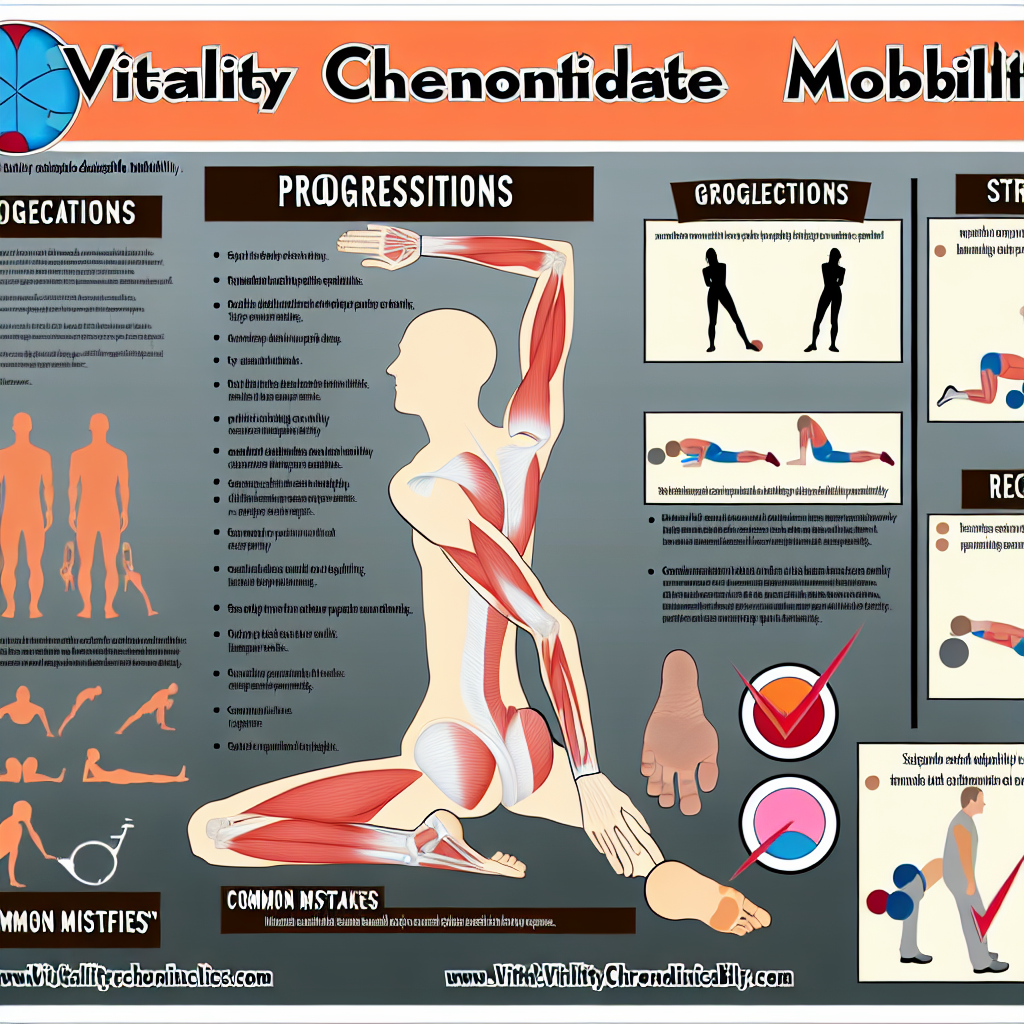
# Stretch Smarter, Not Harder
By Jake Morrison — Vitality Chronicles
If you want to move with more ease, stop chasing dramatic flexibility gains and start building dependable mobility. Whether you’re juggling work and workouts, chasing the splits, or naturally loose-jointed, the right mix of targeted mobility, strength, and recovery will take you farther — and keep you healthy. Below is a practical, science-backed roadmap to help you stretch smarter and progress safely.
## Why “more” range isn’t always better (the short science)
Range of motion comes from two sources: the tissues (muscle, tendon, fascia) and the nervous system that allows or restricts movement. Tissues adapt slowly through repeated loading (mechanotransduction), while your nervous system can alter perceived tightness quickly. That’s why a good warm-up often buys you immediate extra range, but lasting gains require consistent stimulus plus strength to control that new range.
PNF (contract–relax) taps both systems: a brief muscle contraction changes neural input and lets you get a deeper, safer release. Loaded stretching leverages progressive mechanical strain to remodel tissues over weeks. For people with hypermobility, the limiting factor isn’t tissue length — it’s control. Add strength and isometrics to make that flexibility usable and safe.
## Start smart: foundations before extremes
Aim for 10–20 minutes of deliberate mobility work most days, not a single long stretch session once a week. Short, consistent practice beats sporadic intensity.
Warm-up (dynamic, 5–8 minutes):
– Ankle circles and toe lifts
– Hip CARs (controlled articular rotations): slow, full-range hip circles
– Dynamic hamstring swings: gentle, controlled leg swings
– Thoracic rotations: standing or in quadruped (thread-the-needle)
Post-movement static work (after a workout, 30–60 seconds per hold):
– Half-kneeling hip-flexor stretch
– Seated hamstring long-hold (gentle, no bouncing)
– Doorway pec stretch for chest opening
Mix methods across the week: dynamic drills for warm-ups, static holds for consolidation, and PNF or loaded work 1–2 times weekly to stimulate tissue change.
## Practical how-to: techniques that work
PNF (contract–relax) — basic steps:
1. Get into a comfortable but firm stretch.
2. Contract the target muscle (usually isometrically) for 5–8 seconds.
3. Relax, then gently move into the new range and hold 20–30 seconds.
4. Repeat 2–3 times.
Loaded split progression:
– Start with elevated front foot on a yoga block and use hands on the floor for support.
– Gradually reduce support (one fingertip → palm) and add small load (light sandbag) on front thigh for progressive stress.
– Hold 30–90 seconds, 2–3 sets when doing deeper weekly sessions.
Thoracic mobility circuit (daily, 5 minutes):
– 1–2 sets of foam-roller thoracic extensions (10 reps)
– Wall slides (10–15 reps) focusing on scapular upward rotation
– Half-kneeling trunk rotations (8–10 reps per side) with a stable pelvis
Dorsiflexion practice (knees-to-wall progression):
– Face a wall, foot flat. Aim to touch knee to wall without heel lifting.
– Move foot back as mobility improves. Add 3 sets of 8–12 slow reps.
– Combine with calf eccentric work (slow heel drops off a step).
Strength to support range:
– Glute bridges and single-leg bridges (build posterior chain) — 3 sets of 8–15
– Romanian deadlifts (hamstring strength, hip hinge) — 3 sets of 6–10
– Eccentric quad work and slow split-lunges (control the end range)
– Short isometric holds in end-range positions for hypermobile joints (10–20 seconds)
## Common mistakes and how to fix them
– Mistake: Pushing through sharp or joint pain. Fix: Stop. Pain is a red flag. Seek assessment.
– Mistake: Relying only on passive stretching. Fix: Add active strength and control drills so range becomes usable.
– Mistake: Bouncing aggressively (ballistic stretching). Fix: Use controlled dynamic swings or steady static holds.
– Mistake: Holding your breath or bracing incorrectly. Fix: Breathe steadily — exhale into the deeper part of the stretch to ease tension.
– Mistake: For hypermobile folks — locking joints at end-range. Fix: Keep slight joint bend and train eccentric/isometric control.
## Programming that actually works
– Beginners: 3–5 short sessions per week (10–20 minutes) focusing on full-body mobility and basic strength.
– Intermediate: Daily gentle mobility with 2–3 deep sessions weekly (PNF, loaded holds, isometrics).
– Advanced: Daily mobility plus progressive loading cycles — treat mobility like a skill and strength like the anchor.
Remember: frequency beats occasional intensity. Short daily practice prevents stiffness and lets the nervous system re-learn new ranges.
## Recovery — the non-sexy but crucial part
Tissue remodeling happens outside the gym. Prioritize:
– Sleep (7–9 hours when possible)
– Protein intake across the day to support repair (20–30 g per meal is a good rule of thumb)
– Manage overall training load; avoid stacking intense flexibility sessions on heavy leg training days
– Use manual tools (foam roller, massage) for comfort, not as a substitute for progressive loading
If stretching causes bruising, numbness, or sharp joint pain, scale back and consult a clinician.
## Motivation and mindset: consistency over extremes
Progress is often inches and weeks, not overnight breakthroughs. Celebrate the small wins: a few extra degrees on your squat, deeper thoracic rotation, or a split held with control. Treat mobility like a habit — a 10-minute daily routine is more powerful than a 90-minute weekend session.
If you’re frustrated, change one variable: frequency, intensity, or the type of stimulus. Plateaus respond to variety — add a loaded hold this week, swap a static hold for PNF the next, or include a strength-focused session to translate range into function.
## Quick checklist before you go
– Warm up dynamically before deep stretching.
– Move with control; prioritize strength around the joint.
– Mix static, dynamic, PNF, and loaded stretching across the week.
– Respect pain signals and get professional help for persistent issues.
– Track small wins and build daily consistency.
Flexibility isn’t an aesthetic; it’s usable movement that makes life easier — carrying kids, doing heavy lifts, or nailing that dance pose. Steady, evidence-informed practice is the fastest route to lasting, usable range.
What’s one mobility habit you’ll commit to for the next two weeks to actually move better and feel stronger? — Jake Morrison