

Hit Hard, Live Well: A Millennial’s Guide to Smart, Safe, and Fun HIIT
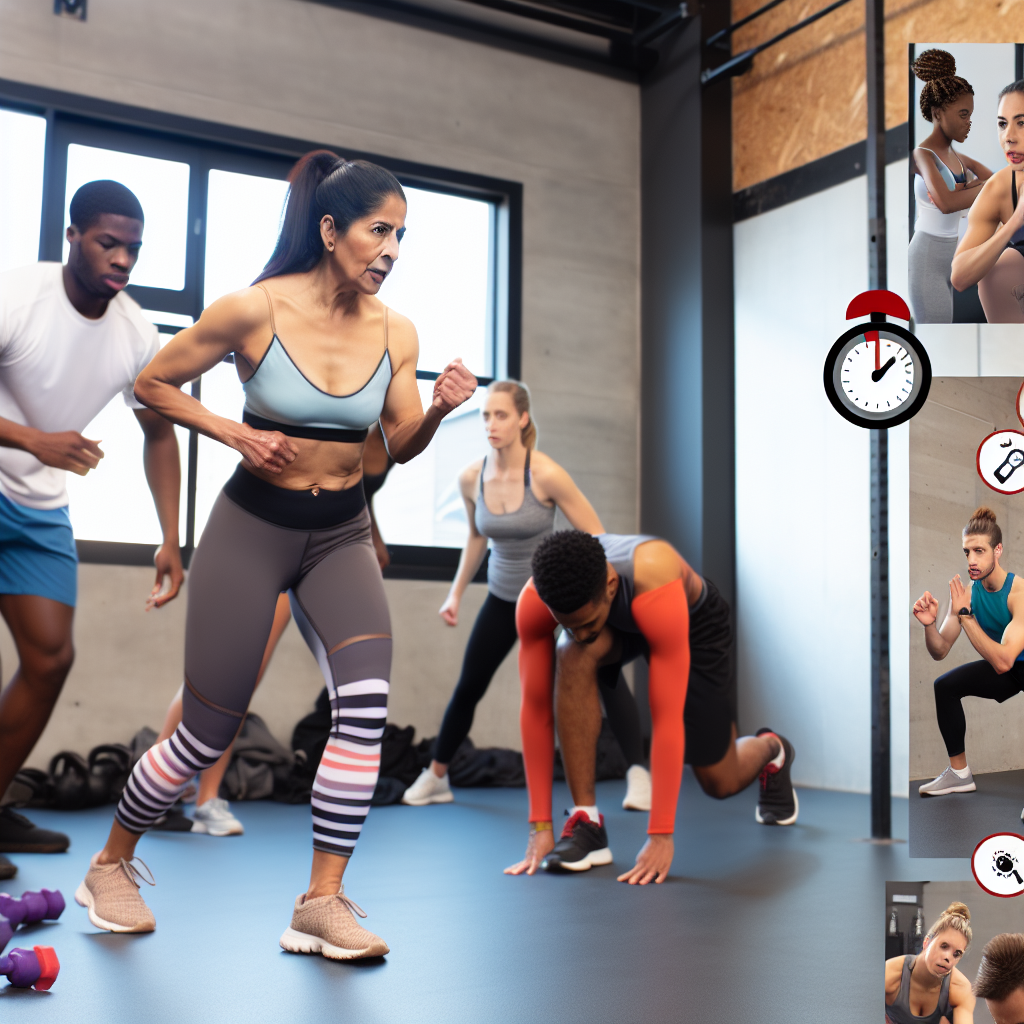
# By Jake Morrison — Vitality Chronicles
## Energetic Hook
You’ve got a 45-minute gap between meetings, a grocery run, and a podcast to catch up on — but you still want to train. Enter HIIT: the time-efficient engine that gets results without requiring a two-hour gym pilgrimage. Done well, it boosts fitness, metabolic health, and mood. Done poorly, it can make you sloppy, burned out, or sidelined with a niggle. Let’s walk through the science, the real-world application, and how to keep it joyful.
## Why HIIT works — the science without the jargon
High-Intensity Interval Training alternates short bursts near maximal effort with recovery periods. That on-off pattern taxes both aerobic and anaerobic systems, improving cardio capacity, insulin sensitivity, and calorie burn in a compact package. Mechanistically:
– Short max efforts stimulate fast-twitch muscle fibers and raise heart rate toward 85–95% of max, pushing cardiovascular adaptations.
– The recovery windows allow partial clearance of metabolic byproducts, so you can repeat hard efforts multiple times.
– Repeated exposure to high-intensity stress also improves mitochondrial function and glucose handling.
But intensity has trade-offs. Neuromuscular fatigue and local muscle acidity reduce coordination and precision late in intervals. That’s normal — and manageable if you plan for it.
## When coordination slips: what’s happening and what to do
That stumble at the end of a sprint or a sloppy landing after a plyo rep is usually fatigue showing up as reduced motor control, not a sign the exercise is inherently dangerous. Simple strategies:
– Prioritize form over speed. Slow a sprint or lower the incline if your stride collapses.
– Pick low-risk modalities for maximal efforts: bike, rower, or sled sprints keep you stable while you push power.
– Train coordination under fatigue gradually — short technical drills at low intensity help movement patterns hold up when tired.
– Regression is progress. Solid technique with a lighter load is better long-term than heavy reps with bad mechanics.
## Practical warm-up and session structure
Warm-up (8–12 minutes):
– 3–4 minutes easy cardio (bike, row, or brisk walk)
– Dynamic mobility: leg swings, arm circles, hip openers
– Movement prep: 2 rounds of 30s air squats, 30s plank, 30s glute bridges
Session framework options for busy lives:
Option A — Efficient 3-day week
– Tue: Full-body HIIT (30–40 min). After warm-up: 6–8 rounds of 30s hard / 90s easy. Use compound movements (kettlebell swings, bike sprints, burpees scaled) and finish with a 5-min mobility cool-down.
– Thu: Strength session (40–50 min). Focus on compound lifts with moderate rest to maintain power.
– Sat: Cardio + core (30–45 min). Interval work plus mobility and targeted core strength.
Option B — 4-day balance
– Tue: Push/upper HIIT or strength (45–55 min)
– Wed: Shoulders/arms with short power bursts (45–60 min)
– Fri: Cardio + core intervals (30–60 min)
– Sat: Lower-body focused session (30–45 min)
Mini “rescue” sessions for busy days
– 15–20 minute sprint: 8 rounds of 20s all-out / 40s easy (bike or treadmill walk recovery). Still effective when time is tight.
## Sample fun option: dance-based intervals
If treadmill monotony kills your vibe, swap in music-driven movement. A 15-minute dance circuit trains cardio, rhythm, and coordination without feeling like punishment.
3 rounds:
– 40s Running man / 20s rest
– 40s Shuffle + reach / 20s rest
– 40s Happy feet (quick step variations) / 20s rest
– 40s Knee-to-elbow crunches / 40s rest
Pick tracks that make you want to move — you’re more likely to show up consistently when it feels fun.
## Technique cues and common mistakes (quick reference)
Kettlebell swing:
– Cue: Hinge at hips, drive with glutes, let the kettlebell float to chest height. Neutral spine.
– Common mistake: Squatting the swing or using arms to lift. Fix: feel the hip snap.
Sprint (treadmill or track):
– Cue: Short, explosive strides with a slight forward lean from the ankles. Pump arms.
– Common mistake: Overstriding or tensing through the neck. Fix: keep cadence high and land under hips.
Box jump / plyo:
– Cue: Soft landing, hips back, knees tracking over toes, absorb through hips.
– Common mistake: Stiff-legged landings or poor knee alignment. Fix: slow down and focus on landing mechanics before adding speed.
Modifications: swap jumps for step-ups, reduce kettlebell weight, or replace sprints with bike intervals if joints or balance are a concern.
## Recovery, load management, and signs you’re pushing too far
HIIT is a stressor — treat recovery like part of the program. Prioritize:
– Sleep: aim for consistent sleep windows.
– Protein spread across meals to support repair.
– Hydration and simple electrolytes if you sweat heavily.
– At least one full rest or active recovery day between intense sessions.
Watch for warning signs of overreaching: lingering soreness beyond normal, declining performance, mood dips, or sleep disruptions. If these show up, reduce intensity or volume for a week and refocus on mobility and aerobic base work.
## Motivation and sustainability: community, variety, and progress tracking
Consistency beats one-off intensity. Keep it sustainable with:
– Small wins: celebrate sticking to three sessions a week or improving interval power.
– Variety: rotate dance cardio, weighted HIIT, and low-impact intervals to keep the body and mind engaged.
– Community: online groups, a training buddy, or a coach provide accountability and better technique feedback.
Track progress with useful metrics: perceived exertion, interval power/pace, or how many high-quality rounds you complete rather than just total calories.
## Takeaway — train smart, live well
HIIT is a powerful tool when tailored to your lifestyle and limits. Warm up, prioritize movement quality, and treat recovery like training: it’s not optional. Mix modalities, make it fun, and lean on community or coaching for technical lifts. For busy professionals, 3–4 focused sessions a week—often under an hour—hit the sweet spot for progress without burnout.
What small, sustainable HIIT change will you try this week to feel stronger, more energized, and more confident in your movement?