

Break Plateaus, Love Your Workouts: Practical Ways to Get Stronger, Leaner, and Consistent
# Break Plateaus, Love Your Workouts: Practical Ways to Get Stronger, Leaner, and Consistent
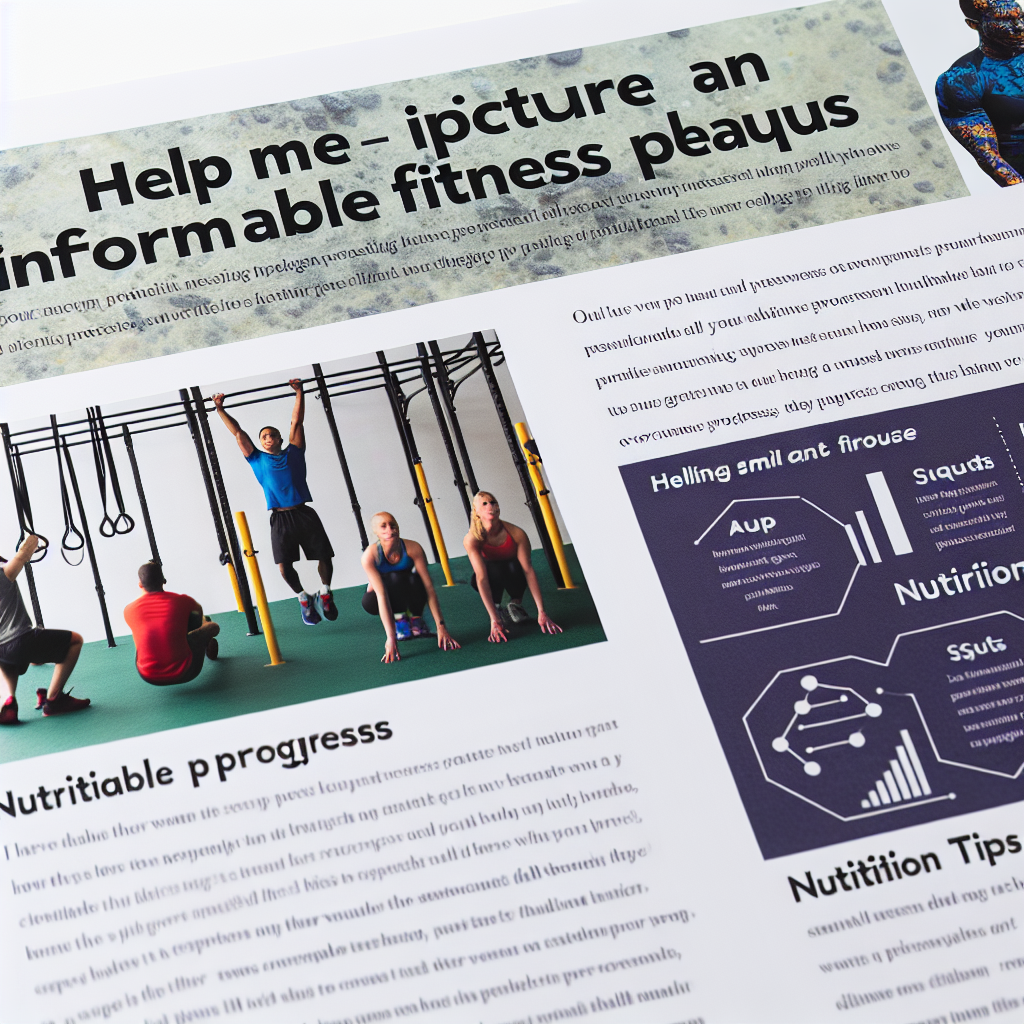
You’ve been showing up. That matters. Whether you’re stuck at 12 pull-ups, can’t push your squat past a familiar loading zone, or you need workouts that actually excite you before the kids wake up, progress comes from smart tweaks — not punishing yourself. Below is an evidence-informed, friendly roadmap to break plateaus, fine-tune a balanced full-body plan, and build a sustainable routine you’ll want to keep.
## Why plateaus happen (and how to think about them)
Plateaus aren’t a moral failing — they’re feedback. Strength and body-composition changes are the product of several systems working together: the nervous system (skill and recruitment), muscle tissue (hypertrophy), connective tissue tolerance, nutrition, sleep/recovery, and the programming that ties it all together.
Science-ish takeaway: when one of those systems isn’t getting the right stimulus or is under-recovered, progress stalls. The fix is usually surgical, not surgical overhaul — targeted adjustments beat wholesale changes.
Practical mindset: treat plateaus as an experiment. Change one variable, track four weeks, and judge the response.
## Pull-up progress: practical strategies
If you can do 12 clean pull-ups and haven’t added reps for months, try these tactics:
– Practice frequency: Grease the groove. Do several submaximal high-quality sets across the day (for example, sets of 4–6, 4–6 times). This builds neuromuscular efficiency without excessive fatigue.
– Mix strength and volume: Keep a heavy weekly session (weighted pull-ups or low-rep sets, 3–6 reps) and a separate volume day (more sets, higher reps or assisted reps). Each trains a different adaptation.
– Eccentric work: Slow, controlled negatives (3–6 seconds lowering) help build strength when the concentric gets stuck.
– Assisted and paused variations: Bands, partner assistance, or paused holds at the top/mid-range improve control and let you overload different parts of the range of motion.
– Technique and breathing: Cue scapular retraction before the pull, reach full range-of-motion (chin over bar, full hang), and brace your core with a controlled exhale. Small form tweaks often give immediate returns.
Common mistakes: bouncing to cheat reps, neglecting scapular prep, or doing only max-effort sets that fry your nervous system.
## Squat breakthroughs: small changes, big payoff
Squat plateaus often trace back to technical leaks, posterior chain weaknesses, or inconsistent recovery. Try these high-return changes:
– Microloading: Add 1–2.5 kg (2.5–5 lb) more often. Those tiny jumps remove the psychological and physical barrier of big jumps.
– Tempo and pause squats: Slow the descent (2–4 seconds) or pause 1–2 seconds at the bottom. You’ll build control and power out of the hole.
– Posterior-chain strength: Romanian deadlifts, hip thrusts, and Nordic curls transfer directly to squat strength because they improve hip extension and hamstring resilience.
– Unilateral work: Bulgarian split squats and walking lunges correct imbalances and increase single-leg capacity.
– Mobility and bracing: Check ankle dorsiflexion, hip flexion, thoracic mobility, and practice diaphragmatic bracing. Often the solution is cleaner mechanics, not raw grit.
Common mistakes: chasing heavy sets without fixing technique, or adding volume that interferes with recovery.
## Designing a balanced full-body template
A simple three-day full-body split works great for busy adults. Aim to cover strength, hypertrophy, mobility, and skill without burning out.
Principles:
– Prioritize compound movements: pull-ups/chin-ups, presses, squats, and hinges.
– Rotate emphasis: one heavy strength day (low reps), one hypertrophy day (6–12 reps), one condition/skill day (speed, volume, unilateral work).
– Keep accessories purposeful: face pulls for shoulder health, curls/triceps as finishers.
– Weekly volume guideline: 6–12 quality working sets per major muscle group is a good starting place.
Sample weekly outline:
– Day A (Strength): Weighted pull-ups 3×5–6, ring dips 3×5–8, Bulgarian split squats 3×6–8. Accessories: face pulls 2×12, plank 3×30–60s.
– Day B (Hypertrophy/Balance): Chin-ups 3×6–8 (use assistance if needed), incline ring push-ups 3×8–12, box single-leg stand-ups 3×6–10. Accessories: rear-delt fly 2×10, triceps extension 2×10.
– Day C (Condition + Skill): Pull-up variations 3×6–10, pike/handstand push-up progressions 3×5–8, walking lunges AMRAP 10–15 steps. Accessories: hammer curls, close-grip push-ups.
Keep workouts to 30–45 minutes when time is tight. Focus beats volume done poorly.
## Nutrition and recovery for performance
If fat loss is the goal, target a modest calorie deficit (around 10–20%) to preserve strength. Prioritize protein (~1.6–2.2 g per kg body weight) distributed across the day to support recovery and muscle maintenance. Hydration, consistent sleep (aim for 7+ hours), and light daily movement (walks, mobility) accelerate adaptation.
Practical tip: if you prefer one larger meal a day, that’s fine — hit total daily protein and calorie targets rather than obsessing over timing.
## Make workouts interesting and sustainable
Variety keeps you coming back. Swap in animal crawls, bear walks, L-sit holds, archer pull-ups, skin-the-cat, pistol progressions, or tempo variations to make sessions playful. Short, focused routines done consistently beat sporadic marathon sessions every time.
Technique focus: always prioritize clean reps. Quality is the multiplier that turns minutes in the gym into meaningful strength and resilience.
## Consistency: the psychology that helps you stick
Habits win the long game. Use implementation intentions (schedule the time and place), habit stacking (attach workouts to an existing cue, like morning coffee), and identity-based goals (“I’m someone who trains before work”). Seek accountability through a friend, coach, or online community and celebrate small wins to keep momentum.
## Community and feedback loops
Objective feedback matters. Record a set or two on your phone for form checks, ask precise questions in forums, and apply changes one at a time so you can see what works.
## Takeaway
Plateaus are solvable with targeted, incremental changes: increase useful volume, prioritize strength-specific work, strengthen weak links, and tidy up nutrition and recovery. Make your plan enjoyable and realistic — small, consistent steps win over sporadic heroic sessions. Track your experiments, give your body time to adapt, and remember that progress is usually invisible until it isn’t.
What small tweak will you try this week to break your next plateau?