

More Plates, More Progress: A Practical, Compassionate Plan to Eat for Muscle and Break Plateaus
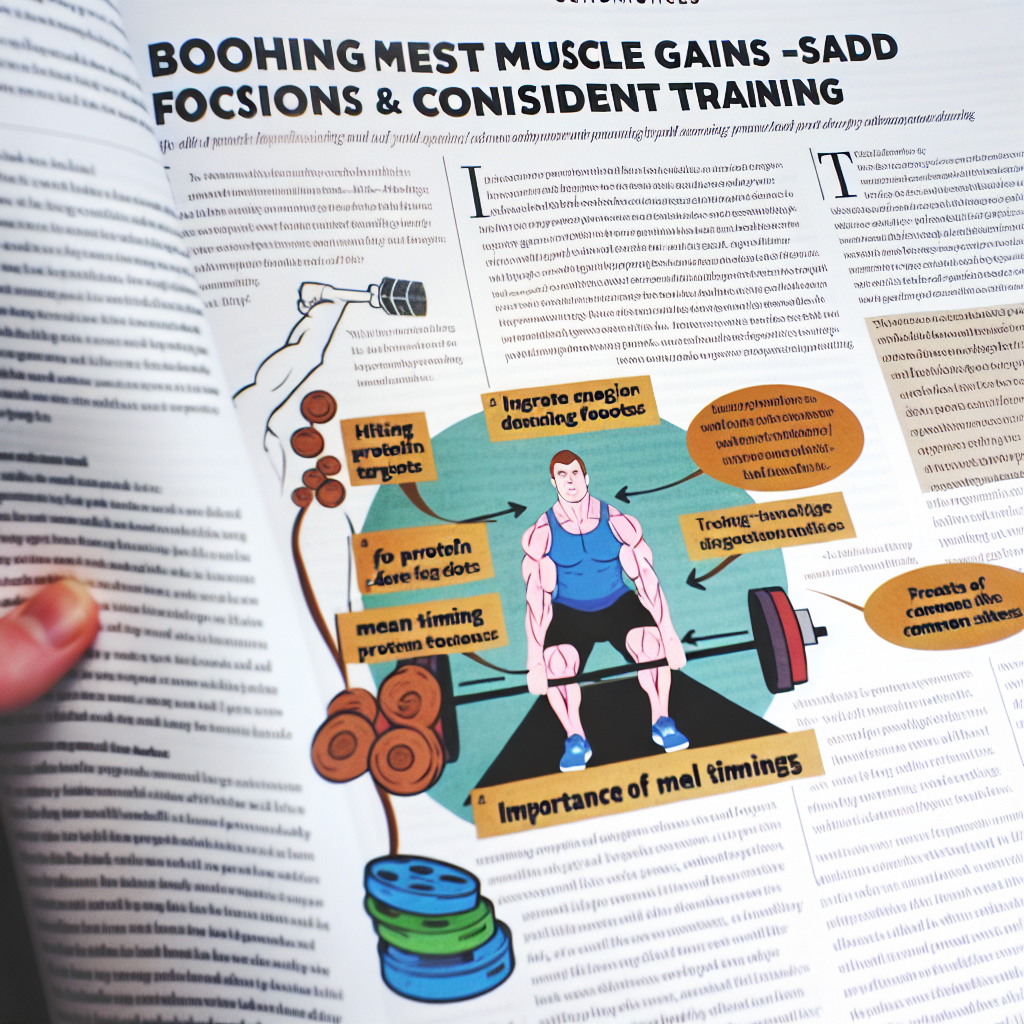
# More Plates, More Progress — Vitality Chronicles by Jake Morrison
If you’ve ever stared down your dinner plate after a tough workout and thought, “Why am I not bigger?” — you’re not alone. The blunt, helpful truth: building muscle usually comes down to one thing first and foremost — consuming more energy than you burn. That’s not glamorous, but it’s effective. This article translates the science into practical, sustainable steps you can actually follow without turning your life into a meal-tracking prison.
## Start with the basics: the math and the goal
– Calorie surplus: aim for +200–500 kcal/day above maintenance. Smaller surpluses favor lean gains and steady energy.
– Rate of gain: target ~0.25–0.5% of bodyweight per week. For a 180 lb person, that’s ~0.5–1 lb/week — enough to be meaningful without excessive fat gain.
– Protein target: 1.6–2.2 g/kg bodyweight (≈0.7–1.0 g/lb). Protein supports repair and muscle growth when paired with resistance training.
Use a simple tracking app for the first 2–4 weeks to learn portion sizes and protein content. After that, switch to habit-based rules: hit your protein, prioritize calories, and keep whole foods in rotation.
## Practical ways to add calories (without living on junk)
If you hate the idea of eating giant plates of bland food, these hacks help you add energy in enjoyable ways:
– Add healthy fats: drizzle olive oil on veggies, spoon nut butter into oats, add avocado or full-fat dairy. Fat is calorie-dense and easy to tuck into meals.
– Favor starchy carbs you like: rice, pasta, potatoes, oats — they’re filling and simple to scale up.
– Choose protein-dense, concentrated options: ground meat, canned fish, eggs, Greek yogurt — easier to eat than large lean steaks.
– Use shakes smartly: blend milk, protein powder, fruit, nut butter, and a little oil for a high-calorie smoothie. Have it after a meal, not as a sole meal replacement.
– Make food tasty: salt, garlic, sauces, herbs — flavor increases appetite and helps you eat more comfortably.
## Timing and frequency that actually help
You don’t need to eat every two hours, but spreading calories across 3–5 meals often makes a surplus feel manageable. Pick 3–4 predictable meal times (example: 8am, 1pm, 5pm, 9pm) and stick to them. Most people find an extended eating window easier for gaining; intermittent fasting tends to make hitting a surplus harder.
Hydration: drink regularly between meals. Avoid downing huge volumes of water right before eating — it can blunt appetite. If you need extra calories, drink them (milk, smoothies) rather than forcing oversized meals.
## Training and recovery: food without stimulus won’t build much
You must lift. Prioritize compound movements and progressive overload. Here’s a simple framework:
– Frequency: full-body 3x/week or push/pull/legs 4x/week works for most people.
– Progression: add a little weight, a rep, or a set every week or two. Small, consistent progress beats sporadic huge jumps.
– Volume: aim for 10–20 hard sets per muscle group per week depending on experience and recovery.
### Technique focus: the big lifts (form cues and modifications)
– Squat (barbell back or goblet): keep chest up, drive knees out, sit back onto the hips, weight through the mid-foot. If mobility is limited, use a goblet squat or box to reinforce depth.
– Deadlift (conventional or Romanian): hinge at the hips, maintain a neutral spine, keep the bar close, drive through the heels. For beginners, practice hip hinges with a broomstick before loading heavy.
– Press (barbell or dumbbell): tuck the ribs slightly, scapula stable, press in a vertical line. If shoulders hurt, reduce range slightly and focus on dumbbell work first.
– Row (barbell, dumbbell, or machine): hinge at the hips, pull elbows back, avoid excessive torso rotation.
If you’re new, focus on technique for 4–8 weeks with moderate weights before chasing heavy PRs. Good form reduces injury risk and builds a stronger foundation for long-term progress.
## Small, evidence-backed additions
– Creatine monohydrate 3–5 g/day: one of the most researched supplements for strength and lean mass gains. Safe and cheap.
– Prioritize sleep: 7–9 hours/night helps recovery and appetite regulation.
## Common mistakes and how to fix them
– Mistake: chasing huge weekly weight jumps. Fix: aim for slow, steady increases and adjust calories by +100–200 kcal if you stall.
– Mistake: only counting protein or only calories. Fix: hit both. Protein first, then make up the rest of calories with fats and carbs you enjoy.
– Mistake: skipping training when eating more. Fix: keep training consistent. Calories without stimulus tend to become fat, not muscle.
– Mistake: overcomplicating macros. Fix: track early to learn, then simplify to rules of thumb: protein target, meal structure, and favorite energy-dense foods.
## Make it sustainable
Batch-cook rice, roast a tray of veggies, and grill a big batch of ground meat or chicken. Keep leftovers visible in the fridge. Start the day with a hearty meal and add a denser dinner plus a shake. If you feel full, slow down — sip a calorie-containing drink and nibble instead of stopping altogether.
Mindset matters: treat eating like training. Schedule meals, set small calorie bumps if weight stalls, and be consistent. Gains are rarely linear — celebrate small wins like extra reps, fuller clothes, or consistent weekly weight increases.
## Real-world micro-plan (example week)
– Monday: Full-body strength (3–4 sets main lifts) + 3 meals + 1 evening shake.
– Tuesday: Active recovery (walk/yoga) + 3–4 meals.
– Wednesday: Full-body strength (slightly higher volume) + snack shake.
– Thursday: Rest or light conditioning + 3 meals.
– Friday: Full-body strength + larger dinner.
– Weekend: 2–3 meals/day with emphasis on extra carbs and fats to hit weekly surplus.
Adjust the number of meals and timing to your job, appetite, and social life.
## Final note — be kind to yourself
Progress compounds. Consistency with a modest surplus, solid protein intake, sensible training, and simple habits is what turns “stalled” into “steady gains.” You don’t need perfect tracking or extreme diets — you need structure, patience, and small rituals that make eating easier.
So here’s your challenge from Vitality Chronicles: What’s one small habit you can add this week (an oil drizzle, a daily shake, or an extra 100 kcal at dinner) that would move you toward a consistent surplus — and will you try it for two weeks?