

Stretch Smarter, Not Harder: A Practical Roadmap to Flexibility, Stability, and Progress
# Stretch Smarter, Not Harder: A Practical Roadmap to Flexibility, Stability, and Progress
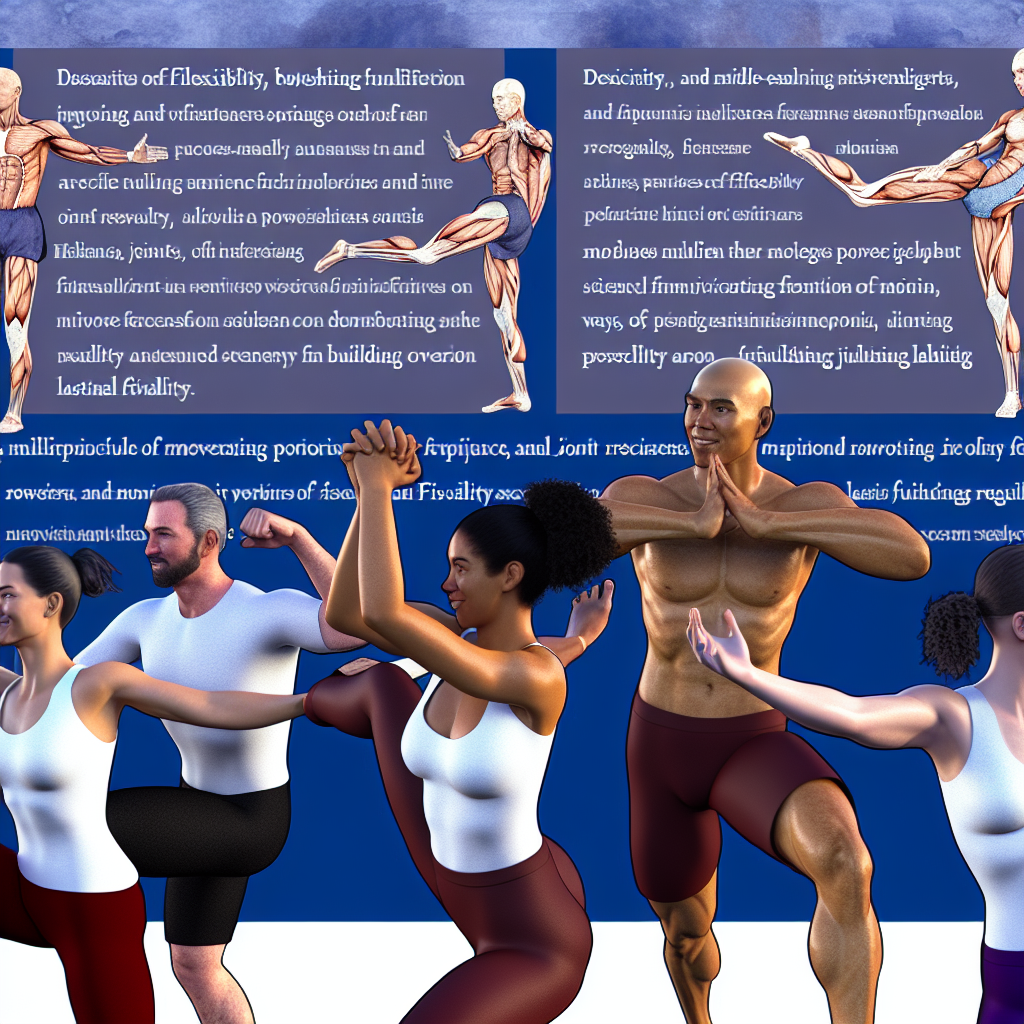
If you want splits, deeper squats, or a more expressive thoracic arch for posing, you’re in good company. Flexibility isn’t just a vanity goal — it improves movement quality, helps reduce injury risk, and opens up new ways to move in sport, dance, and everyday life. But progress isn’t linear. Plateaus, loose joints, and nagging stiffness are normal. Below I break the science, practical tools, and motivation into a clear plan you can actually use.
## The science in plain English
There are two big reasons you can’t do a movement today that you could do (or hope to do) later: tissue length/tolerance and neuromuscular control.
– Tissue length and tolerance: Muscles, tendons, and fascia can adapt to repeated lengthening over time. Long static holds and progressive loading increase tolerance and, to an extent, structural length.
– Neuromuscular control: Your nervous system protects joints. If a new range feels unfamiliar, your brain will limit it. Dynamic work, PNF, and active strength at end range teach the nervous system that the position is safe and controllable.
Both pieces matter. That’s why the fastest, safest gains come from mixing modalities: warm, mobilize, lengthen, and then build strength and control into the new range.
## A practical starter framework
Start with a 5–15 minute routine most days rather than a single 60–90 minute marathon once a week. Frequency beats one-off duration for motor learning and recovery.
Warm-up (5–10 min): brisk walk, bike, or leg swings to increase blood flow.
Mobility circuit (5–10 min): target hips, hamstrings, ankles, and thoracic spine with dynamic moves — hip CARs (controlled articular rotations), walking lunges with a twist, and ankle dorsiflexion drills.
Stretching and control (6–10 min): mix static holds (30–90 seconds), PNF/isometric-assisted reps, and active lifts into the end range (e.g., straight-leg lifts in your front split).
Finish with 3–5 minutes of strength-driven end-range work: glute bridges, single-leg RDLs, or eccentric calf lowers.
## Methods that actually work (and how to use them)
– Dynamic stretching: Best as a warm-up. Move joints through their ranges 8–12 controlled reps to wake up the pattern.
– Static holds (30–90s): Use these to build tissue tolerance. Don’t chase pain — aim for a 5–7/10 intensity where it feels challenging but not sharp.
– PNF / isometric-assisted stretching: Contract the muscle for 5–8 seconds, relax, then push deeper. Great for hamstrings and hips — do 1–2 sets per session when you’ve already warmed up.
– Active flexibility: Practice lifting into and holding the end range using your muscles (not a partner or a strap). This creates usable range.
– Loaded progressive stretching: Add small weights or bands at end range over time. Highly effective but use only once you have solid control and no joint pain.
## If your joints are loose or hypermobile
Hyperextension and general hypermobility change the rules. You can gain range easily, but you may lack stability. Prioritize control.
– Strength first: build balanced strength across quads/hamstrings and hip abductors/adductors. Single-leg work (step-ups, split squats) is gold.
– Soft landings and micro-bends: avoid locking joints into extension. A tiny bend reduces stress on ligaments.
– Modify stretching: favor active end-range work instead of passive hanging positions. Avoid loading a fully locked joint.
– Get professional advice if you have recurring ligament pain or a history of tears.
## Busting splits plateaus
Being inches away from a full split is frustrating — but fixable.
– Increase frequency in short doses (10–15 min daily) to improve neural adaptation without excessive soreness.
– Mix modalities: do PNF once or twice weekly, static holds on other days, and active lifts daily.
– Add strength at the end range: hold split positions with an active lift, or add a light band for resistance to teach control.
– Deload if needed: if soreness or stiffness persists, reduce intensity while keeping the same frequency.
## Thoracic mobility — why it matters and how to get it
A mobile upper back improves posture, breath, and a cleaner chest-up arch without stressing the lumbar spine.
– Tools: foam-roll the upper-mid back, practice thoracic extensions over a foam roller or bench, and follow with wall slides.
– Drills: open-book rotations and thread-the-needle for rotation; band pull-aparts and scapular retractions for strength.
– Cueing: lift the ribcage and lengthen the spine instead of forcing a lower-back arch.
## Address common movement limits: APT, internal rotation, and dorsiflexion
– Dorsiflexion: do ankle band mobs and kneeling ankle mobilizations. Practice loaded dorsiflexion in controlled squats.
– Hip rotation: 90/90 drills and hip CARs rebuild balanced mobility. Clams and side-lying band work strengthen external rotators.
– Anterior pelvic tilt (APT): combine glute/hamstring strengthening with core stabilization (deadbugs, pallof presses) and gentle hip-flexor mobility. Re-train neutral with pelvic tuck drills.
## Recovery and red flags
Stretching should not produce sharp, joint-focused pain. If you feel persistent pain in major joints or have a history of ligament injuries, consult a clinician before progressing aggressively. Rest days are real progress too — recovery varies by individual.
## A simple 20-minute session you can try
1. 5-min brisk walk + leg swings (dynamic warm-up)
2. 5-min thoracic extensions and open-books
3. 6–8 min targeted work: PNF hamstring sequence or 3 × 30–60 s split holds with active leg lifts between sets
4. 3–5 min strength finish: glute bridges, single-leg Romanian deadlifts, or eccentric calf lowers
## Final pep talk
Flexibility isn’t a single ritual — it’s a system: warm, mobilize, stretch, and then train control. Celebrate small wins (those extra inches, a cleaner arch, less knee wobble) and remember that being able to control your new range is the real victory. Keep sessions short, consistent, and focused on form. If you’re hypermobile or recovering from injury, let stability lead the way.
What’s one small flexibility goal you’ll commit to this week — and what’s the first step you’ll take to get there?