

Winter Miles and Big Moments: How to Run Safely, Stay Motivated, and Connect with Other Runners
# Vitality Chronicles — by Jake Morrison
## Winter Miles and Big Moments: How to Run Safely, Stay Motivated, and Connect with Other Runners
Cold weather and big races test more than your legs — they test planning, gear choices, and mindset. Whether you’re slipping into your first chilly morning run, chasing a marathon PR, or simply looking for a place to celebrate small wins, the running community is one of the best resources you have. Below I break down the simple science you need, practical steps you can try this week, and the motivational moves that keep training sustainable and enjoyable.
### The science in plain terms
– Heat production and loss: Your muscles generate heat during exercise, but heat escapes via convection (wind), conduction (contact with cold surfaces), and evaporation (sweat). In cold, dry air evaporation is sneaky—you can still lose a lot of moisture even if you don’t feel hot.
– Wind chill and frost risk: Wind steals the thin warm layer of air next to your skin, increasing the rate of heat loss and the risk of frostbite on exposed skin. Wind chill charts are simple guides to when you need to cover up more.
– Fuel and hydration: Digestion and hydration work the same in cold weather, but cold slows sensory cues (you may not feel thirsty). Carbohydrate intake is important to support heat production on long efforts.
Knowing the physiology helps you choose gear and pacing that actually match the conditions—not just what looks warm.
### Practical application: gear, traction, and routes
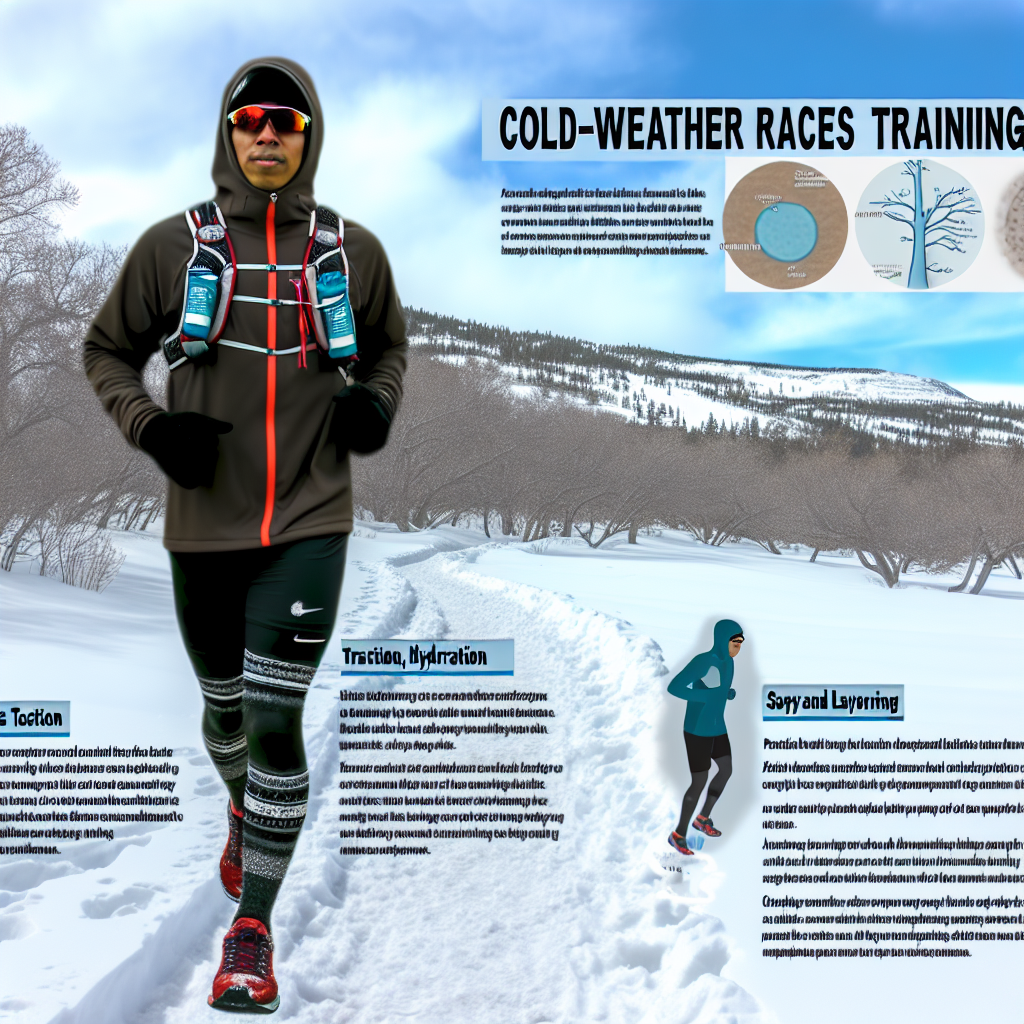
Layering basics
– Base layer: synthetic or merino next-to-skin fabrics that wick moisture. Avoid cotton.
– Mid layer: light fleece or insulated top for core warmth.
– Outer layer: thin wind- or water-resistant shell for windy or wet days.
Leave a little space between layers so trapped air can insulate. Don’t tighten gloves or shoe fit so much that circulation is reduced—that makes fingers and toes colder.
Footwear and traction
– Cleared roads: regular road shoes usually work.
– Packed or fresh snow: low- to mid-lug trail shoes offer better mechanical grip.
– Ice: add traction devices like Yaktrax or screw-studded options. Try them on a short route first to adapt to the feel.
Technique adjustments on slippery surfaces
– Shorten your stride and keep cadence a bit higher; this reduces braking forces and improves stability.
– Keep feet landing under your center of mass rather than reaching out in front.
– Avoid sudden pivots or fast turnarounds; slips often happen during abrupt directional changes.
Visibility and battery management
– Use a headlamp to see and be seen, and add reflective layers.
– Keep your phone next to your core to slow battery drain in cold conditions.
– Plan your route with warm bailout spots (cafes, transit stops) if conditions change.
Hydration and fueling tips
– Store a bottle under your jacket or use an insulated flask to prevent freezing.
– Keep gels or chews in inner pockets or gloves so they don’t solidify; warm briefly in your hand before eating.
– On long runs, set reminders to drink even if you don’t feel thirsty.
### Form, strength, and warm-up: run stronger, run safer
Simple warm-up sequence (5–10 minutes)
– Easy jog 2 minutes to raise core temp.
– Dynamic mobility: leg swings (10 each leg), walking lunges (8–10 steps), high knees (20–30 seconds).
– 2–4 short strides (60–80% effort) to prime turnover before tempo or race efforts.
Technique cues
– Posture: tall chest, relaxed shoulders, slight forward lean from the ankles.
– Foot placement: land beneath your hips, keep contact time short.
– Arms: swing forward-back, not across the body; keep elbows at ~90 degrees.
Off-season strength (2 sessions per week)
– Single-leg Romanian deadlift: 8–12 reps each side. Cue: soft knee, hinge at hips, long spine. Modification: use bodyweight only.
– Glute bridge: 12–15 reps. Cue: push through heels, squeeze glutes at top.
– Plank variations: build to 60 seconds. Cue: neutral spine, ribs down.
These build resilience for uneven winter surfaces and reduce injury risk.
### Common mistakes and how to avoid them
– Overdressing: start slightly cool. You’ll warm up fast once you move.
– Ignoring wind chill: exposed skin matters; cover ears, nose, and fingers when needed.
– Skipping warm-up: cold tissues are more injury-prone—take the time to prime.
– New traction on race day: test any spikes or traction aids beforehand.
– Neglecting hydration: schedule sips, use insulated bottles, and plan refill points.
### Community, motivation, and race-day tactics
– Ask specific questions in groups: share your climate, pace, shoe model, and constraints so replies are useful.
– Celebrate small wins: a consistent month of training or a tough interval done in wind is progress. Post it. Own it.
– Race-day threads: use them to coordinate meetups, transport, and last-minute logistics. Spectating or following virtually? Share encouragement and photos—it lifts runners mid-race.
– Volunteer or spectate: being around a race recharges motivation and reminds you why you train.
### Keep it compassionate and realistic
This isn’t about forcing long icy runs every week. Balance motivation with caution. If conditions are hazardous—severe wind chill, heavy ice, or storms—choose safe alternatives: treadmill intervals, cross-training, or a focused strength session.
### Takeaway and next step
Winter running and big events are opportunities to practice planning, celebrate consistent progress, and lean on the running community. Dress in layers that manage moisture and trap air, pick footwear and traction that match the surface, prioritize visibility, and include simple strength and warm-up habits to stay resilient. Ask clear, specific questions when you need advice, and celebrate each step.
What one winter running habit will you commit to this week to make your miles safer or more enjoyable?