

Smart Gains: How to Navigate Nutrition, Training and Community Advice Without Burning Out
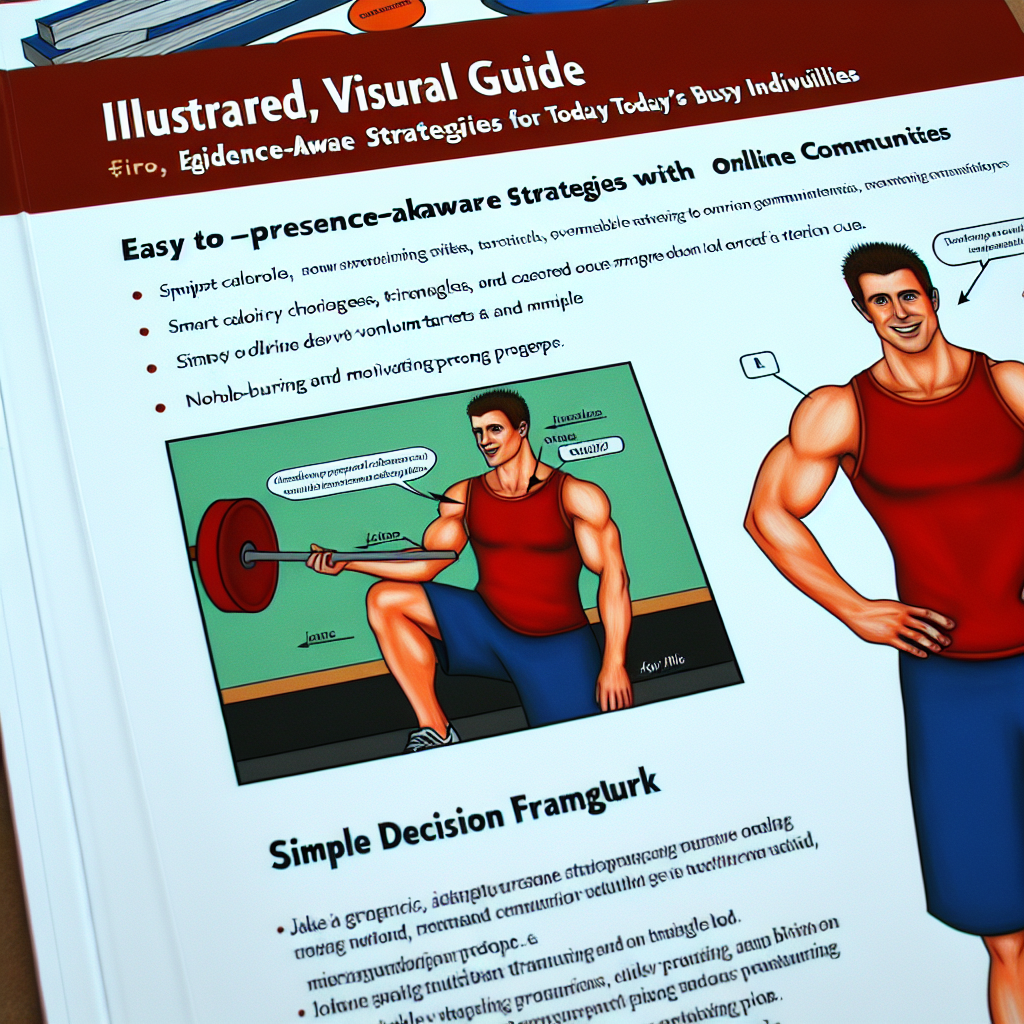
# Smart Gains: How to Navigate Nutrition, Training and Community Advice Without Burning Out
By Jake Morrison — Vitality Chronicles
If you’ve spent any time in fitness threads you know the rhythm: transformation photos, calorie calculations, and hot takes on volume. That noise can be energizing — or it can make you freeze. For busy folks juggling jobs, family and workouts, the trick isn’t following every opinion; it’s turning a few evidence-backed rules into habits you can actually keep.
Below is a compact playbook that breaks the science into practical moves, explains technique where it matters, and keeps the motivation real without preaching.
## Engage with communities the smart way
Online communities are fantastic for ideas and accountability — but they reward useful context. When you ask for help, share:
– Training age (how long you’ve been lifting consistently)
– Bodyweight and main goal (gain 5 kg muscle vs lose fat)
– Recent program and how you track progress
Search before you post — many answers already exist — and avoid asking strangers to estimate your body-fat from a photo. If you upload progress pictures or technique videos, say exactly what you want (form cues, set/rep suggestions, nutrition tweaks). Treat crowd advice like data points, not gospel.
## Nutrition: calories, macros — and where they come from
The practical truth: calories and macronutrients are the main drivers of body-composition change. Want to build? Aim for a modest calorie surplus and prioritize protein. Want to lose fat? a modest deficit plus preserved protein and resistance training.
That said, food quality matters for recovery, hormones, and satiety. If you’re short on calories late in the day, prioritize nutrient-dense, protein-containing options instead of low-effort, low-protein snacks that fuel grazing.
Smart late-day calorie options:
– Protein smoothie with oats, nut butter and milk (or fortified plant milk)
– Greek yogurt with fruit and granola
– Whole-grain toast with mashed avocado and a boiled egg
– Trail mix or nut butter on rice cakes
These supply calories, protein, and micronutrients — better for recovery and sleep than empty snacks.
Practical targets:
– Protein: ~1.6–2.2 g/kg bodyweight for hypertrophy
– Calories: +200–500 kcal/day for a reasonable bulk; −200–500 kcal/day for gradual fat loss
Track trends, not daily perfection. If weight and performance are moving in the right direction over 2–4 weeks, you’re on track.
## Training volume: what the evidence and reality say
Research supports higher weekly volumes for hypertrophy up to a point. A practical guideline: target roughly 10–20 quality sets per major muscle group per week. Adjust for experience, intensity and recovery.
If you’re time-poor, you can:
– Do fewer sets with higher intensity (work closer to technical failure)
– Increase frequency and spread volume across more short sessions
– Prioritize compound lifts for strength and a few targeted isolation exercises for shape
Quality beats quantity. Controlled reps, full range of motion, and progressive overload will outdo sloppy volume.
Sample approachable weekly layout (for busy people):
– 3 full-body sessions (3–5 exercises each): compound focus + 1–2 accessory exercises
– Aim for 12–16 total weekly sets per major muscle group
– Rotate emphasis each week (e.g., more pressing one week, more pulling the next)
## Building stubborn body parts: a practical demo (lateral delts)
Some muscle shape is genetic, but you can still improve size and appearance. For lateral delts:
– Prioritize direct work: lateral raises (dumbbell/cable), upright rows, face-pulls
– Mix rep ranges: heavier sets 6–10 and moderate 12–20 for time under tension
– Frequency: 2–3 shorter sessions per week beats one long session
– Technique cues: slight lean away from the working arm, elbow slightly bent, lead with the elbow, pause at the top
Common mistakes and fixes:
– Using momentum: slow the eccentric and pause briefly at the top
– Lifting too heavy: drop load and increase quality of contraction
– Neglecting scapular control: include face-pulls and band pull-aparts
## Exercise/technique breakdown: the lateral raise (quick how-to)
– Setup: stand tall, dumbbells at sides, slight knee bend. Hinge a few degrees at the hips.
– Execution: raise arms 30–45° from torso (not straight to ear), lead with the elbow, stop when thumbs are at shoulder height.
– Tempo: 1–2s up, 1–2s controlled down.
– Progressions: add sets, slow negatives, or use drop-sets for finishing work.
Modifications: perform seated or one-arm cable variations if balance or shoulder pain is an issue.
## Practical tips for busy lives
– Prep 1–2 grab-and-go calorie-rich items weekly (smoothie packs, overnight oats)
– Track protein daily; keep it simple with a protein goal rather than perfect macros
– Use a progressive plan that adds a rep, set or a small load each week — avoid constantly switching programs
– Prioritize sleep and stress management — recovery is where gains consolidate
## How to interpret feedback and make decisions
Treat advice like measurements. If multiple reputable sources — community consensus, good coaches, and literature — point to the same change, try it for 4–8 weeks and measure results. Keep experiments short and trackable: a single variable at a time (e.g., +200 kcal/day or +2 sets/week to a lagging muscle).
If something feels overly complex or unsustainable, simplify. Long-term consistency trumps short-term optimization.
## Takeaway
Progress is built on consistent, smart choices, not perfection. Aim for a modest calorie surplus with adequate protein when bulking, focus on quality sets and reasonable weekly volume, prioritize direct work for lagging muscles, and use community feedback selectively. For busy schedules, prioritize simple systems: meal prep, a protein target, and a progressive, minimally complicated program.
You don’t need to be perfect every day — you just need to be steady. What’s one small, sustainable change you can try this week to move your fitness forward?