

Midweek Reset: How to Show Up, Stay Safe, and Move Forward When You’re Running on Empty
# Midweek Reset: How to Show Up, Stay Safe, and Move Forward When You’re Running on Empty
_Short, practical steps to protect your wellbeing, reclaim your energy, and keep moving — even when motivation is thin._
Some weeks feel like steady progress; others feel like treading water. Wednesday — the midpoint — is less about fixing everything and more about taking one small, strategic turn toward safety and motion. Below is a concise, evidence-informed playbook you can use midweek (or any time you need a reset).
## Check in with yourself — no pressure
You don’t always need an epiphany. The science of behavioral activation shows that small, consistent actions raise mood and reduce avoidance. A midweek check-in can be as simple as asking:
– What’s one small win?
– What drained me this week?
– What can I let go of tonight?
Five minutes of journaling, a quick text to a friend, or an anonymous post in a supportive forum can shift perspective. The goal is presence, not perfection. When you name one small positive and one stressor, you reduce cognitive load and create a concrete starting point for action.
Practical prompt: set a 5-minute timer. Write three bullets: Win, Drain, Tonight’s small step.
## Protect your boundaries online
Online communities can be lifelines — and risk zones. If someone offers help privately and you don’t know their credentials, be cautious. Protecting your privacy is proactive self-care.
Quick safety moves:
– Keep personal details private. Avoid sharing full name, address, workplace, or identifying photos with strangers.
– Use platform tools. Restrict DMs, mute or block harassers, and report suspicious accounts.
– Save evidence. Screenshot and preserve conversations if someone crosses a line.
– Prefer vetted services. For professional help, use licensed referrals or established telehealth platforms.
If harassment is a worry, create an alternate account for anonymous sharing — a small barrier that lets you participate safely.
## When a clinician makes you uncomfortable
Healthcare should feel respectful. If a clinician’s words or behavior unsettle you — patronizing, sexualized, or dismissive — trust your reaction. You are allowed to set boundaries and seek different care.
Steps to protect yourself:
– Trust your instincts. You don’t have to rationalize why you feel uneasy.
– Use a brief script: “That comment made me uncomfortable. Can we stick to discussing my health?”
– Bring support. Bring a friend to appointments or ask for a chaperone when available.
– Document and report. Note dates, comments, and how you felt. Check your local licensing board for complaint procedures; many clinics have patient advocates.
– Find another provider. It’s reasonable to switch clinicians when trust is broken — ask for referrals or use verified directories.
You deserve care that respects your dignity.
## Move when motivation is missing
Exercise is one of the most reliable mood-boosters, but when you’re depleted it can feel impossible. Reframe “exercise” to make it accessible and non-intimidating.
The science: even brief activity triggers physiological benefits — increased blood flow, endorphin and dopamine release, and improved neural plasticity for mood regulation. Behaviorally, tiny wins build self-efficacy, making future activity likelier.
Micro-movements first
Start with 2–10 minute bursts. Examples:
– 5-minute walk around the block
– 3 minutes of standing stretches (neck rolls, shoulder openers)
– Two-song living-room dance break
Research shows short, incremental activity improves mood and makes larger efforts more approachable.
Exercise technique breakdown (accessible options)
1) Walk: Maintain relaxed shoulders, a tall posture, and a 90-degree arm swing. Common mistake — leaning forward or clenching jaw. Cue: “Lift your chest, breathe easy.”
2) Chair squat (modifies a full squat): Stand in front of a chair, feet hip-width. Sit back to lightly touch the chair, then stand. Keep knees tracking over toes, weight in heels. Mistake: letting knees cave in — press knees outward.
3) Wall push-up (upper-body option): Hands on wall at shoulder height, step back, lower chest toward wall keeping a straight line from head to heels. Mistake: sagging hips — engage core.
4) Glute bridge (posterior chain, low-impact): Lie on your back, knees bent, feet hip-width, lift hips until body forms a straight line from knees to shoulders. Press through heels, squeeze glutes. Mistake: overextending lower back — keep ribs down.
5) Two-minute core plank (knee or full): Forearms under shoulders, body in a straight line. Modify on knees. Mistake: dropping hips — imagine a straight board.
Form tips: focus on slow, controlled movement rather than speed or rep count. Quality beats quantity; even a few solid reps matter.
Small habits to build momentum
– Habit stack: after your morning coffee, do a 60-second stretch.
– Make it tiny: promise “just one lap” — often you’ll do more.
– Low-stakes activities: gentle yoga, easy cycling, or a stroll during a phone call.
– Sensation focus: notice breath, sunlight, or how shoes feel. Mindful movement reduces rumination and increases reward.
Accountability without pressure
Pair movement with something you enjoy: a podcast, a playlist, or a friend. Use short structured programs (Couch-to-5K style) if you like guided progress, but prioritize consistency over performance.
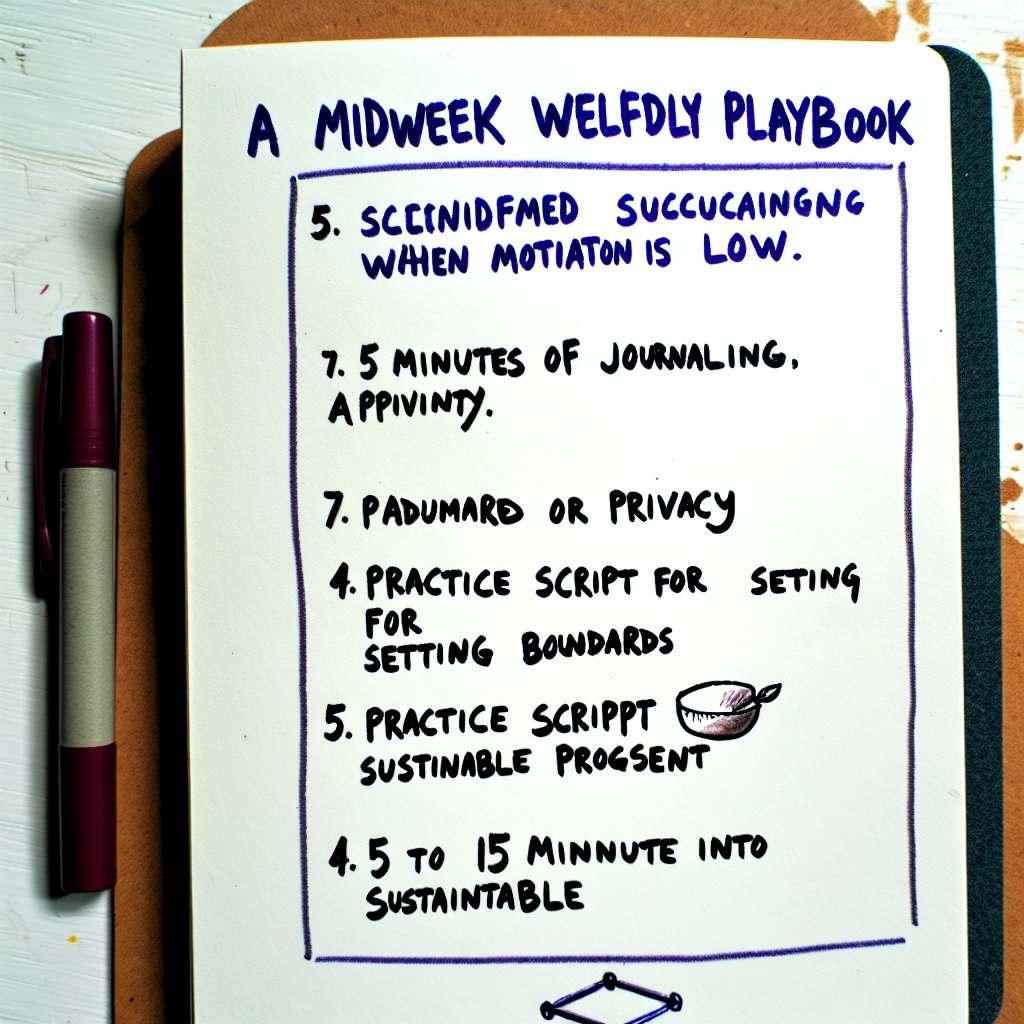
## Build a safe support plan (a midweek template)
Combine these elements into a simple plan you can repeat:
– One check-in: 5 minutes journaling or a message to someone you trust.
– One privacy step: update DM settings or create an alt account for anonymous sharing.
– One boundary action: craft a short script for a clinician or research how to file a complaint.
– One micro-movement: 5–15 minutes of gentle activity with a focus on form.
Repeat this each Wednesday (or whenever you need it). Small, repeated choices compound into resilience.
## Common mistakes and quick fixes
– Mistake: “I need two hours at the gym.” Fix: 5–15 minutes of focused movement is valid.
– Mistake: “If I don’t feel motivated, I shouldn’t exercise.” Fix: movement often creates motivation — start tiny.
– Mistake: Ignoring boundary discomfort. Fix: practice a short script and lean on documentation.
## If you’re in crisis
If you’re thinking about harming yourself or feel unsafe, reach out now to emergency services or a crisis line. In the U.S., dialing 988 connects you to the Suicide & Crisis Lifeline. If you’re elsewhere, check local resources or contact your healthcare provider for immediate support.
## Takeaway
Showing up doesn’t mean having all the answers. It means taking manageable, proven steps to protect your safety, preserve dignity, and care for your mental and physical health. Small check-ins, smart online boundaries, clear actions when a provider crosses a line, and tiny, consistent movement can turn a rough week into steady recovery. You’re allowed to rest, ask for help, and change the people and places you trust.
What one tiny action will you add to your Wednesday reset this week — a five-minute journal, a privacy tweak, a boundary script, or a short movement break?