

Quiet Wins: A 30-Day Meditation Challenge to Reclaim Your Focus and Calm
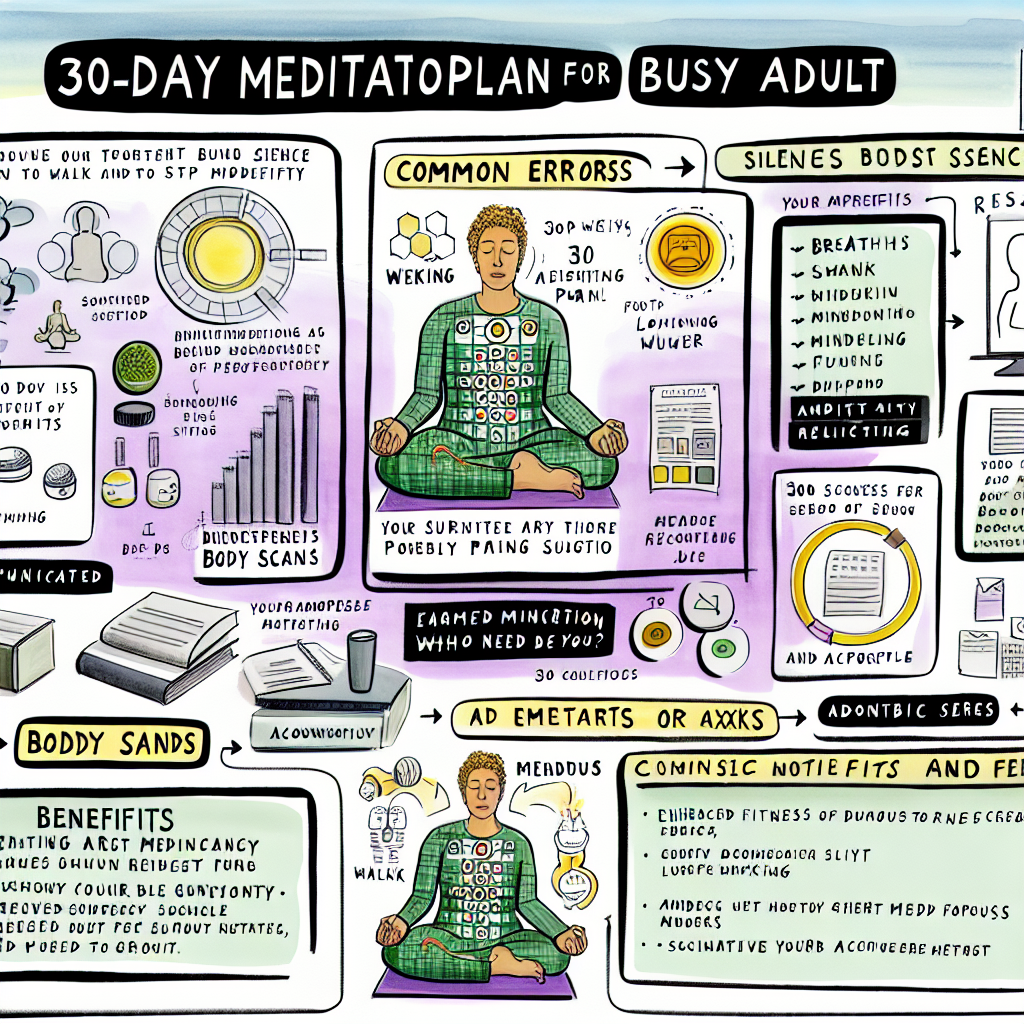
# Quiet Wins: A 30-Day Meditation Challenge to Reclaim Your Focus and Calm
Feeling scattered, overstimulated, or anxious? You’re not alone. Meditation isn’t about zoning out or achieving perfection — it’s a practical tool to steady attention, reduce stress, and give your brain the pause it’s been begging for. This month-long framework is built for busy millennials and health-conscious adults who want a realistic way to make meditation a daily habit without pressure or perfectionism.
## Why silence actually helps (and what the science says)
We live in a culture that prizes constant input: podcasts on the walk, playlists at the coffee shop, and endless scrolling between meetings. Brief periods of stillness let the nervous system downshift, memory consolidate, and priorities come into focus. Clinical research consistently links regular meditation with reduced anxiety, improved attention, and better emotional regulation. For people who train or exercise regularly, meditation also helps recovery by lowering cortisol, improving sleep quality, and sharpening focus during workouts — all of which make your fitness efforts more sustainable.
Think of quiet as productive downtime for your brain: not empty, but purposeful.
## The realistic goal-setting framework
The trick isn’t to aim for some idealized practice; it’s to set something measurable and realistic. Pick three things and write them down:
– Frequency: 5–7 days a week is a strong target; even 3–4 days is progress.
– Duration: start with what feels doable — 3–5 minutes if you’re new, and gradually build to 20 minutes.
– Method: breath awareness, body scan, guided meditation, loving-kindness, or mindful walking.
Example plan to put on paper: “I will meditate for 5 minutes every morning on weekdays.” That specificity removes ambiguity and excuses.
## Technique breakdown — simple, actionable practices
Below are core techniques with coaching cues so you can start today.
1. Breath Awareness (anchor: the breath)
– How: Sit comfortably, soften your shoulders, and rest your hands. Notice the natural in-and-out of your breath. Don’t force it.
– Cue: Track 1–2 words to your inhale/exhale (e.g., “in…out”). When your mind wanders, label it “thinking” and return to the breath.
– Common mistake: Trying to control the breath. Fix: Observe first, then adjust if needed (slower breaths help calm the system).
2. Box Breathing (structure for nervous-system downshift)
– How: Inhale for 4 counts, hold 4, exhale 4, hold 4. Repeat 4–6 times.
– Use: Great for pre-workout nerves, stressful meetings, or bedtime.
3. Body Scan (anchor: sensations)
– How: Starting at the crown of your head, move attention slowly down the body. Notice warmth, tension, or neutral sensations without judgment.
– Cue: If you hit tension, breathe into it and soften.
– Modification: Do a 1-minute micro-scan (feet → calves → thighs) when time is tight.
4. Loving-Kindness (anchor: directed intention)
– How: Silently repeat phrases like: “May I be safe. May I be healthy. May I live with ease.” Then extend those wishes to a friend, then someone neutral.
– Use: Boosts emotional balance and empathy; useful on tough days.
5. Mindful Walking (anchor: steps)
– How: Walk slowly for 5–10 steps, noticing heel → toe, the lift, the contact. Coordinate steps with breath if helpful.
– Use: For people who hate sitting — this is active meditation and a great way to reset mid-day.
## How this helps your fitness goals
– Better recovery: Lower stress hormones and improved sleep = faster repair and less overtraining.
– Sharper focus: More attentive workouts, better form, fewer injuries, and more consistent progress.
– Emotional regulation: Easier to stick to nutrition and training plans when cravings and stress responses are less reactive.
Small mental gains compound into real physical progress.
## Common mistakes & practical fixes
– Mistake: “I can’t stop my thoughts.” Fix: That’s normal. The practice is noticing and returning, not stopping.
– Mistake: Forcing long sessions too soon. Fix: Start with 3–5 minutes and add 1–2 minutes each week.
– Mistake: Bad posture (slumped or tense). Fix: Sit tall with a soft spine, or try a chair/standing/lying modification.
– Mistake: Expecting instant calm. Fix: Track consistency, not perfection. Some sessions feel great; others don’t — both are useful data.
Coaching cue: treat meditation like a strength habit. Small, consistent reps win.
## Accountability that supports momentum
– Buddy system: Text a friend “done” after each session. Short accountability beats lofty intentions.
– Habit stack: Pair meditation with an existing routine — after your coffee, before email, or after brushing teeth.
– Community: A weekly class, online group, or app can provide structure and gentle nudges.
## The 30-day plan (simple, progressive)
Week 1: 5 minutes daily. Focus on breath or a guided practice.
Week 2: 7–10 minutes daily. Introduce a 1–2 body scans across the week.
Week 3: 10–15 minutes daily. Add one session of loving-kindness or a mindful walk.
Week 4: 15–20 minutes daily. Reflect on what length and style fits your life going forward.
Keep a one-line log: time, method, and one word about how you felt. That small record creates momentum and insight.
## When resistance shows up (and what to do)
You’ll have days when anxiety spikes, you feel restless, or you hyper-focus on bodily sensations. That’s part of the training. If a session leaves you keyed up, shift to a grounding practice — five slow breaths, a short walk, or a sensory reset — rather than quitting the habit. Repeated short sessions rewire attention networks; avoid the temptation to chase one perfect experience.
## Mindfulness beyond the cushion
Meditation isn’t only what happens during formal practice. Use micro-pauses: a five-breath reset before a stressful call, a 60-second body-check between tasks, or a headphone-free walk. These tiny investments create cumulative benefits that show up in workouts, work, and relationships.
## Ethics, values, and deeper training
If you explore retreats or deeper training, choose teachers and programs that are transparent about ethics and safety. For those who prioritize sustainability or animal welfare, ask about food, lodging, and program policies.
## Takeaway — start where you are
Meditation isn’t a magic switch — it’s a steady practice you build with short, consistent steps. Start with a specific, realistic goal, use simple tools to manage a busy mind, and plug into supportive accountability. Protecting a few quiet moments each day isn’t indulgent; it’s essential mental hygiene. Begin where you are, be kind to the process, and let small wins compound into real calm.
Ready to try a 5-minute session tomorrow morning and see what changes in your week? Give it one week — what might you notice at the gym, at work, or while sleeping if you actually stuck with it?